
Career Advice

April 28, 2026
Neil Massey
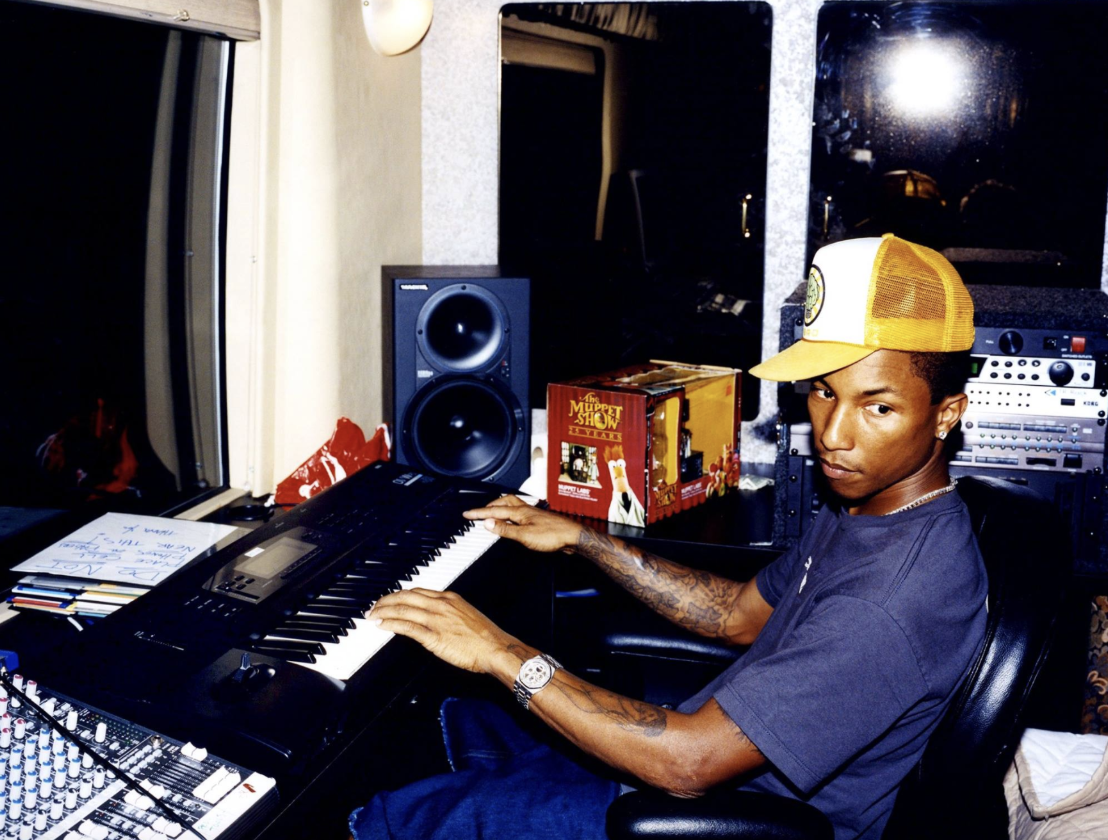
A psychologist is perhaps a protégé of somebody like Pharrell Williams (I doubt any psychologists will read this…). Defying and contorting notions of creativity, Pharrell is one of those rare talents whose brain inhibits both Big-C and Little-C kinds of creativity. Psychology and neuroscientific developments tell us that the cognitive efforts behind creativity are uniquely positioned - not just because you’re ‘born with it’ if you’re exceptionally talented, but also because it requires us to decode and defy preexisting and established modules of knowledge in order to formulate imagined futures - in the temporal lobe of our brains, the hippocampus.
I’m not here to talk about the brain though, don’t worry. The point is, we know our experiences are conducive to our creativity in the entertainment industry. In this article, I’m going to share a few short lessons on the how-to-think curriculum curated by one of the industry’s finest, a modern great, Pharrell Williams.
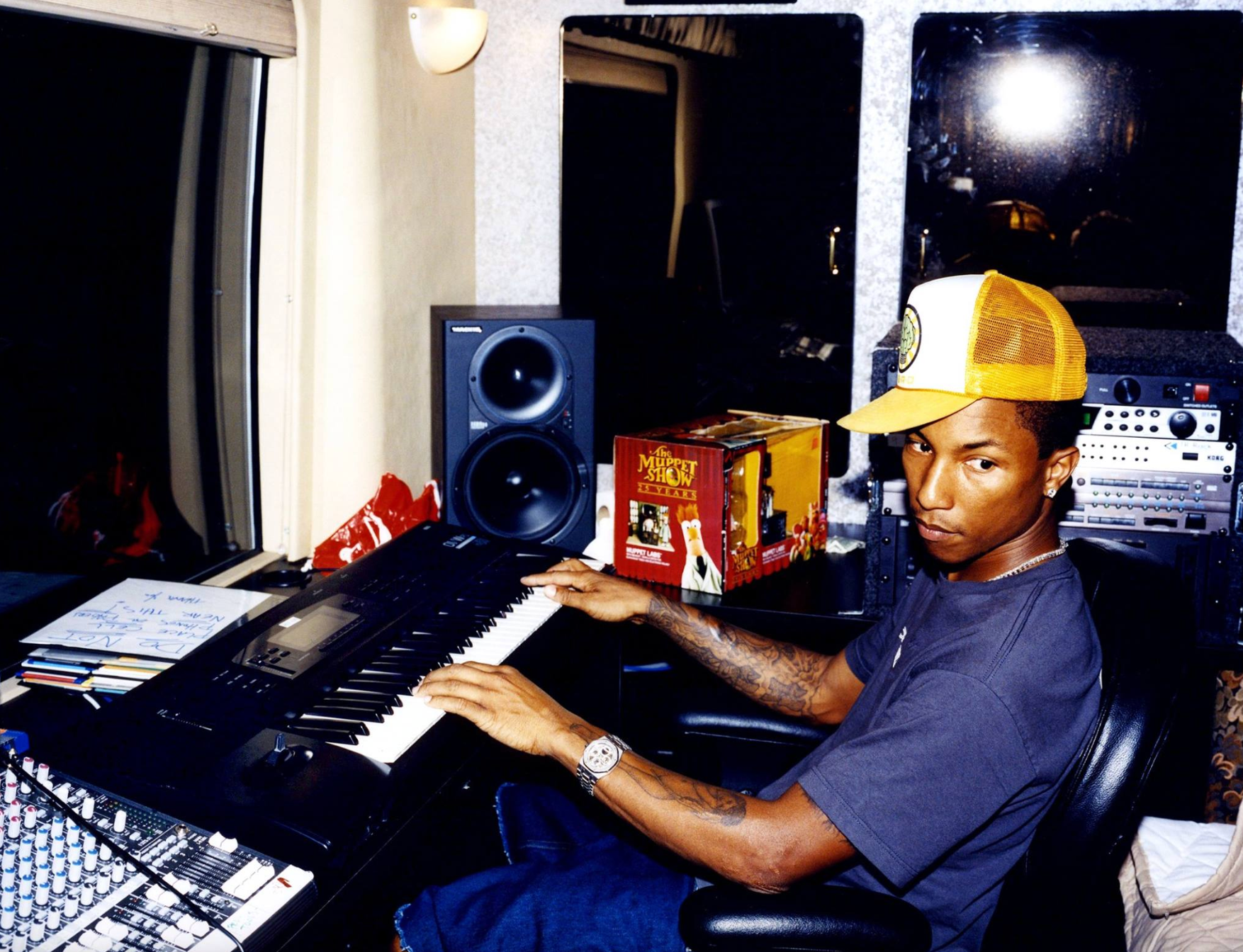
In an interview from last year, Pharrell talks about ‘“being like a firefly in a preserve jar” in reference to growing up between the concrete walls of Virginia Beach’s projects - feeling as though his imagination exceeded far beyond the perceived limitations of his surroundings. In Piece by Piece, he recalls the bible reference his grandmother bestows, ‘To Whom Much Is Given, Much Is Required’, and uses it as a symbol for the complexity of his creative struggle alongside his exceptional gift for music. Being creative means a regular, forced inner dialogue about the expanse of your creative judgement. Just as Pharrell explains to Maggie Rogers in that timeless watch from NYU’s Clive Davis Institute, ‘You have to be willing to see’, in order to achieve any kind of creative Victory, whether intended for others’ ears and eyes or not.
In a world where we remain more insular than ever - where some argue that phones are the new cigarettes in a democracy - breaking the chain of repetition served up on your algorithm, overcoming failure, and inventing ‘the new’ as part of your creative process requires a whole lot of connection. And connection requires you to get out. The good news is, the figures indicate we're tackling this first module quite successfully: over 19 million people travelled for live music in 2026 alone. Moreover, your average Gen-Zer will travel over 800 miles for their favourite artist. In any experience you extract and translate, ‘You realize there really are no ceilings, except the ones that you perceive’, and this is the core ingredient in any artistic development. How you choose to conceptualise those experiences is up to you. What do you really intend to share with the world, rather than what you think you should be sharing?
“You can’t premeditate it. Some of these things you can plan, but oftentimes, the most magical things are those you didn’t. It’s just the instinct to ask the right question at the right time, or being around the right kind of really receptive person or a perfect environmental context so you can look at each other and go, ‘Oh yeah, we’re crazy if we don’t do this right now.’ It’s just natural. It’s no different than a Tuesday coming after a Monday, right before Wednesday.”
It’s the winning strategy behind fulfilling any goal. When in the pursuit of reaching a creative objective, don’t just write down the negative intrusions, write down your goals and learn to love the process. There is the wobbly statistic that people who very vividly describe or picture their goals are anywhere from 1.2 to 1.4 times more likely to successfully accomplish their goals than people who don’t - wobbly, because this is concerned with exercising discipline, and that’s individualistic. Either way, learning to love the process of creating is rewarding - you gain everything, and lose nothing. In entertainment, we’re the intangible, inextricable force at the intersection of not just other art forms, but also rapid developments in technology, science and much more.
“Write down all your fears, your flaws, your insecurities, the guilt, the pressures. Look at them on a list. Know they're all distractions… When you let a dumb decision dictate your life, that's true failure”

As is the rhythm of life, learn to ‘dance with uncertainty’, imagine your desired outcomes, but don’t bet on exactness - creativity obviously doesn’t always work that way. Sometimes it’s good to be objective about yourself and say, ‘My work isn't the biggest, it's not the best, but it's mine’. Like anyone with a goal, use your own assessment to improve - be a vessel, an insider, an observer and participant of what’s beyond your remit (you’re already doing that by reading Gen Admission, so congratulations!). Understand your resources, and find a way to enjoy the revision.
“I’ve always prided myself on my collaborations. I feel like my best work was that.”
How do you always meet the 50-yard line of any task in the entertainment industry? Be a collaborator, first and foremost.
At face value, being a collaborator may be exclusively perceived as working cross functionally with one shared goal in sight. But the most successful collaborations require conflict, before internal or commercial measurements of success. We all theorise, but there is genuinely no system of reliability behind a great creative collaboration. When asked about the process behind producing some of music's most iconic records with Jay-Z, Pharrell candidly said, ‘He’s not good because he’s just made good records, no, he’s really like a character. He’s an odd guy…If you ever spoke to him, have a conversation with him, it’s not a regular conversation… That’s odd and different and weird and amazing, and makes him a character’. There’s absolutely something to be said about identifying and understanding how your personal vantage point can be harnessed to add quantifiable value to your collaborative input. Shying away from speaking about utilising our differences is not productive - not for maintaining authenticity (for brands or people), or for boosting revenue. When you embody true collaboration instead of theorising how it should look, everyone wins. Ask your peers for feedback and understand your strengths and weaknesses. Know what you bring to the table and take responsibility for it.
“Collaboration is like a crash course most of the time”.
There is a whole architecture to learn about driving better outcomes through differing perspectives, and that’s something I’m learning to navigate through watching others and asking questions in my own career. Whether it’s in his work with the Neptunes, his Creative Direction at Louis Vuitton (after his partnerships with CHANEL), or even in bringing the Despicable Me soundtrack to life - Pharrell’s career also teaches us an important lesson about collaboration. Working with determination and honesty across disciplines, with a commitment to make the most of a diverse set of perspectives and experiences, is the defining force of collaboration. You have to learn to enjoy navigating that inevitable difference in practice, before you can master steering its commercial value.
Also essential to collaboration, is perhaps the most important module of them all: empathy.
“Empathy is the skeleton key to any room. It’s the number one thing that we need before love. Because if you have no empathy, then you can’t even get to why you should love someone else. That goes for the one that you marry, the one that you hate, your parents, your children, strangers. If you have no empathy, it’s not possible for you to like - and definitely not possible for you to love.”
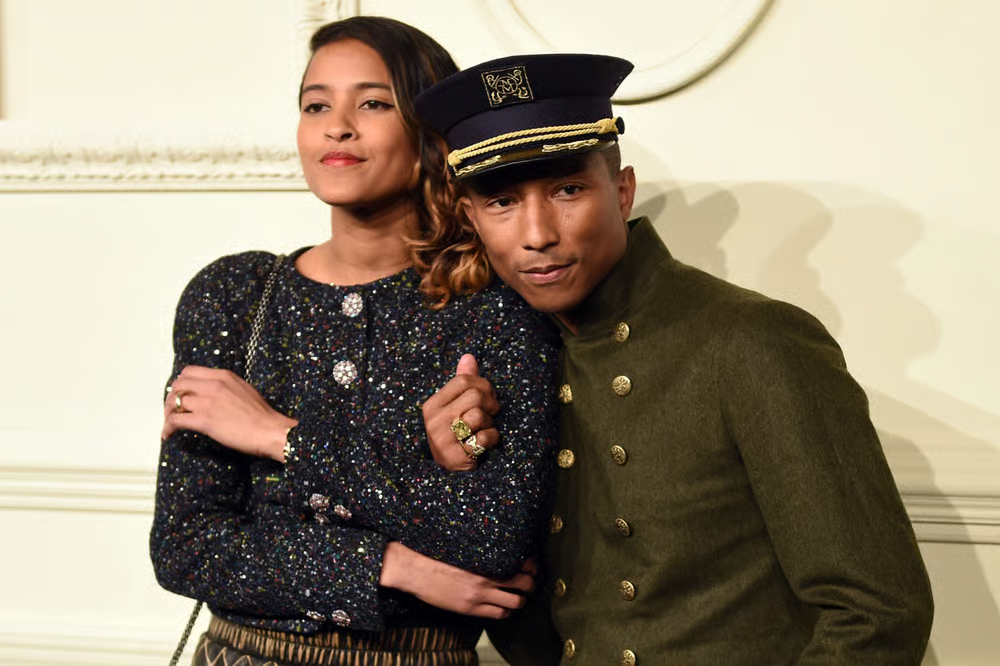
Pharrell & his wife, fashion designer Helen Lasichanh
Where contentiousness (for the sake of it) becomes increasingly normal in common culture, resilience and empathy in the creative industries remain key at an organisational and individual level. Empathy is often miscategorised emptier than what it actually is. Correct, it speaks to sensibility and sensitivity, but we don’t talk half enough about how important it is as a skill in an industry entirely built and reliant upon relationships. In entertainment, we have the unique ability to formatively and massively shape societies needs, values and emotions. Empathy civilises and connects us, but it also encourages us to question discourses that shape the intellectual upbringing of future generations.
Cognitive and affective empathy are essential translation tools for artists (it’s why you feel betrayal listening to a breakup song, even if you’re a very single person), and compassionate empathy is what strengthens our commercial and stakeholder partnerships. This industry demands a heightened affinity for empathetic practices.
Despite what the world tells you, don’t believe the non-chalant hype!
If you enjoyed this article, sign up for our newsletter and follow us on Instagram and LinkedIn to stay up to date with Gen Admission 🎶

.png)