
Trend Analysis
June 26, 2026
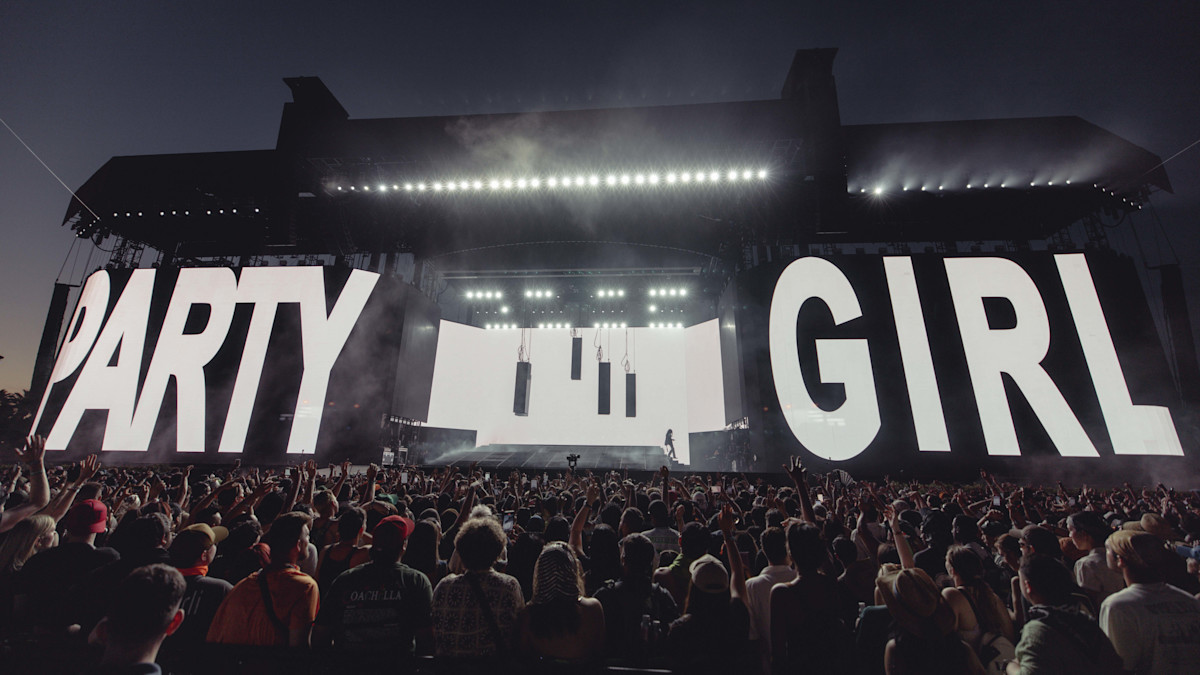
Notch | Charli XCX at Coachella 2025
Summer 2026 marks the first post-brat summer. The clean-girl aesthetic expired and the messy, hedonistic and unapologetically bold partygirl was in. Many hailed it a phenomenon, a cultural reset, a cultural movement, or a tiktok trend.
However two years on, can we really say brat was any of those things?
Brat achieved critical acclaim shortly after its release, including a score of 95 on metacritic, and was rated the #1 album of 2024. Charli was decorated with her first Grammy awards, five Brit awards and a Mercury Prize nomination. She was the hottest festival booking for 2024 and 2025, climaxing in a star-studded Coachella performance that went down in herstory. It was named word of the year by the Collins English Dictionary and even became a talking point during the 2024 American presidential election.
Brat’s initial roll-out focused on defining the partygirl archetype it was inspired by. Charli’s NYC partygirl rave was the spark that would light the rest of brat mania on fire. In attendance were NYC’s most talked about nepo babies, socialites and internet darlings such as Julia Fox and Addison Rae.
The brat universe further expanded within the “360” music video where a roundtable of “hot internet girls,” including Gabriette, Rachel Sennott and Alex Consani, deliberated over their successor.
Brat appeared to have a halo effect on all within its orbit, most notably on Addison Rae who had a generational rebrand coinciding with public appearances with Charli. This further reinforced the idea that everyone who hung out with Charli was cool by association.
Charli introduced us to the world of brat by depicting the partygirl blueprint and what the essence of being brat means. The impact was infectious, everyone online wanted to identify with it. However it was the medium through which she did this that lasted, rather than the ethos itself.
Before, we had the clean-girl aesthetic until brat redefined it as a nihilistic, bold partygirl. But did Charli’s new listeners actually become partygirls, or did they just adopt a persona?
The brat image is inherently personal and as Michael Appler, Communications and Media Relations Director at Trendalytics, puts it, can’t be bought. “Charli XCX has released very little merch, and that’s the point,” Appler says. “Brat is anti-merch; it embodies fan-made, DIY club outfits in their purest form. It wouldn’t make much sense for a retailer to market products as ‘brat,’ because the core Charli XCX customer wouldn’t buy them.”
The very fact that Pinterest boards circulated informing audiences of how to dress according to the brat aesthetic, negated the fact that the partygirl ideology spread as Charli envisioned. At its core it doesn’t follow a colour or texture palette, and if listeners actually attended underground raves they would know that clothing isn’t seen as a uniform but as functional wear to enable you to dance freely.
Charli stated that a strappy white top worn without a bra is a staple of the brat anti-aesthetic, which she used to illustrate the minimal, spontaneous and functional clothing which is worn as a means to have fun, not the end.
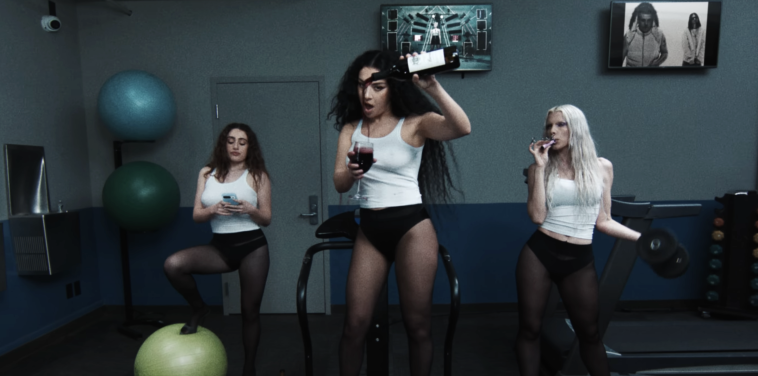
Yet it felt like a Regina George moment, suddenly a white strappy top was a hot commodity. People took what she said literally at face value, wearing exactly a white strappy top and no bra, without tailoring her ideology to themselves.
“Currently, searches for white tank tops are +30% greater than they were last year, and we expect this to grow,” Appler tells Teen Vogue. And after the era of capsule wardrobes and minimalism, this increase is particularly striking.
One of the biggest missteps of the brat rollout was a collaboration with H&M. The announcement ruffled feathers of her angels, who felt they didn’t need a fast fashion collaboration to help them align themselves with her as fans, nor a bundle of accessories to buy to be part of the partygirl aesthetic. It was mass-produced, cheap quality and homogenous. It illustrated that this is all you needed to be a brat partygirl, and resulted in the cannibalisation of the idea instead.
Brat was inevitably going to be stanned and cherished by Charli’s long-term angels, but it was the new listeners that made it into the brat summer phenomenon that it became.
But did brat have any lasting cultural impact on the audience who were the driving force that brought it from underground to mainstream ubiquity?
Brat felt like it served as a fun outlet “non-party girls” could hop on the trend of one summer, to vent out the pent-up frustrations post covid-19 pandemic, only to then abandon the aesthetics they quickly embraced.
Instead of spurring people to discover and explore underground dance culture, it felt like the result was elements of underground culture being appropriated to entertain a mainstream audience for a summer.
Brat’s biggest impact was on marketing, and as Charli prophesied “I’m your favourite reference baby.”
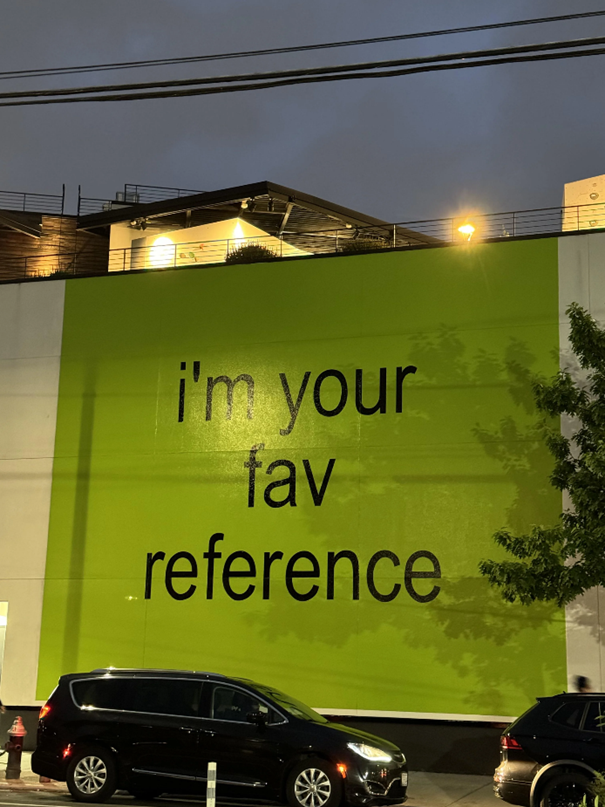
Charli’s impact has already been referenced and replicated by some of the biggest artists in the world, and it would be premature to try to quantify the full impact it will have on artistry.
The viral Apple dance became a key segment of her show, where she would have a new surprise guest perform it each time. Other artists such as Role Model and Sabrina Carpenter adopted this cameo feature in their setlists with the Sally dance and arrest segments of their respective shows.
Recently, the infamous brat wall was interpreted during Olivia Rodrigo’s recent album roll out.
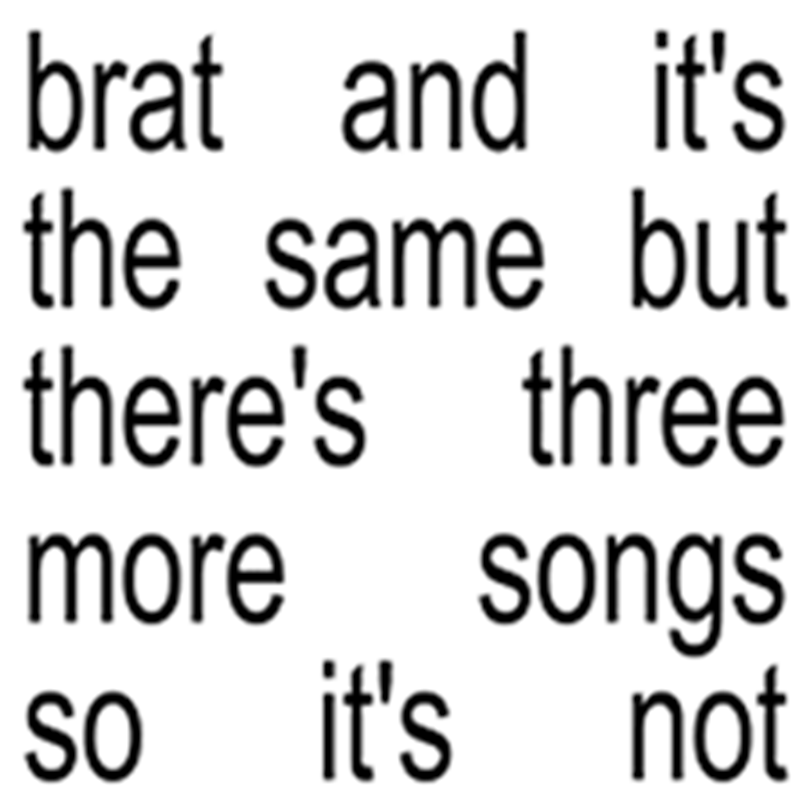
The brat deluxe edition brat and it's the same but there's three more songs so it's not popularised black font on white background, and has become a staple in internet dialogue.
Charli changed the meaning of a remix album with brat and it's completely different but also still brat.
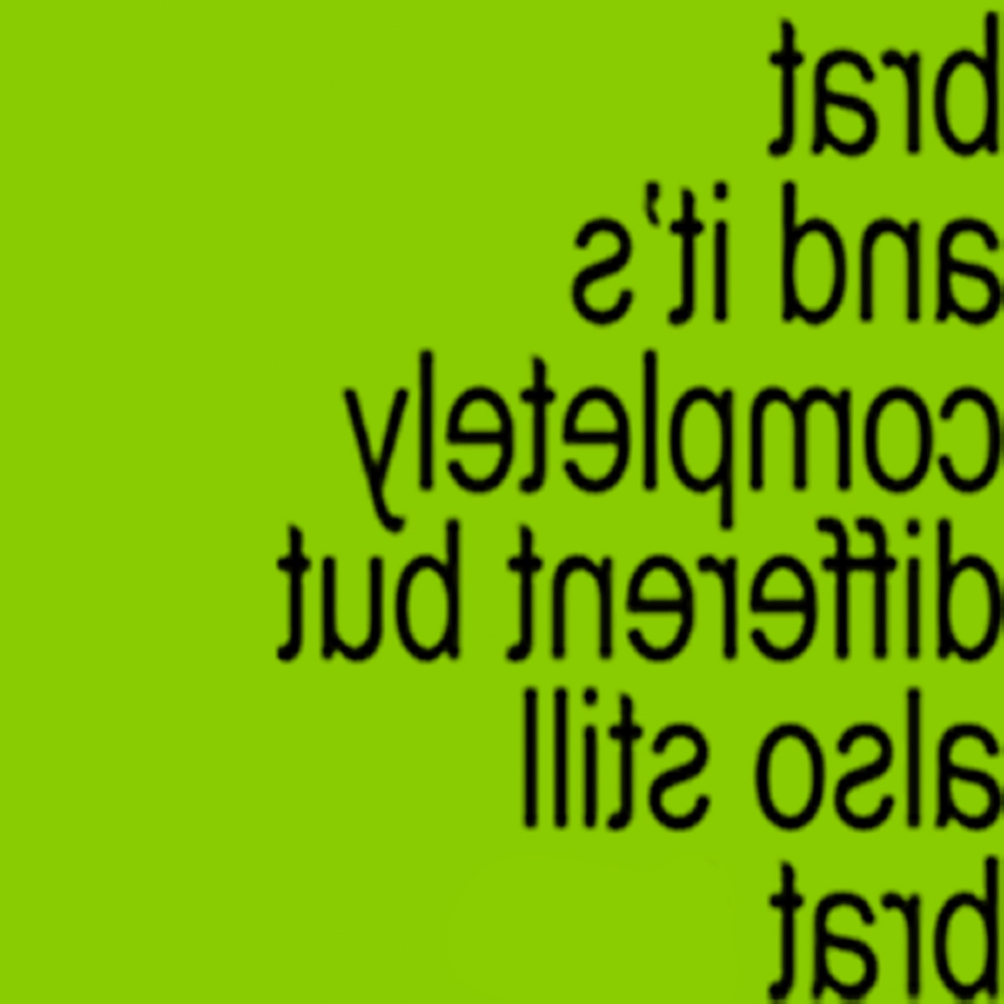
Several other artists have followed this reimagined feature-ridden remix template such as Rose Gray, Pink Pantheress and Zara Larsson.
It would be an oversimplification to ignore the impact brat has also had on how artists create music. It isn’t a coincidence that the most exciting music created in 2026 is hyperpop, including releases by Slayyyter, Underscores, Tsubi Club, and Tiffany Day. It expanded interest in electronic music that previously felt niche. Brat has generated an increased appetite for electro-pop that is empowering many artists to explore this sub-genre.
EDM artists have for long been doing pop-up shows and boiler room sets, what felt revelatory to some was simply brat's mainstream audience encountering underground culture for the first time.
Everyone was suddenly having a brat summer – but is that the key – that the cultural impact of this album would only ever exist within a fixed period?
Charli expertly used moments and activations to keep the brat frenzy going. When Charli eventually became fatigued with the constant expectation for another moment in the brat summer cycle, nothing else really happened. This exact tension is what Charli’s mockumentary The Moment discussed. Charli ultimately killed brat because of the unsustainable need to keep feeding it a moment.
Charli XCX told Vanity Fair's Anna Peele in October 2025 that she doesn't "really get to decide when it's over or not. I think that's up to the world. It will eventually exist as a relic. I don't think people will forget it. On the other hand, it's not fucking New Wave."
If it did have an impact on culture, it would still be happening. That’s the whole point, you don’t impact culture if the culture doesn’t keep it alive without you.
If brat were a cultural reset, it would have fundamentally changed how people think, behave, market, consume or participate in that culture. The only thing that brat potentially reset was music marketing because labels are incentivised to control who is having the moment, and brat gave them a roadmap.
If brat were a cultural movement, it would involve a group of people adopting shared behaviours, values, aesthetics, or ideas that continue beyond the brat partygirl aesthetic. As illustrated, this is the one area brat had the least impact on.
Much like how punk fashion eventually became detached from the anti-establishment politics and DIY ethos that created it, brat’s visual identity spread far beyond the underground dance music culture that inspired it. Many participants adopted the aesthetic signifiers of a brat summer without necessarily engaging with the nightlife spaces, music scenes, or cultural influences from which Charli grew up around. Ironically, one of Charli’s first statements of her new project was that “the dancefloor is dead,” perhaps a quiet admission of what brat had ultimately failed to revive in the mainstream.
Undoubtedly, brat was a phenomenon that defined the zeitgeist of summer 2024 and 2025.
But if brat can’t revive the partygirl - can anything?
If you enjoyed this article, sign up for our newsletter and follow us on Instagram and LinkedIn to stay up to date with Gen Admission 🎶

.png)
