
Trend Analysis

April 9, 2026
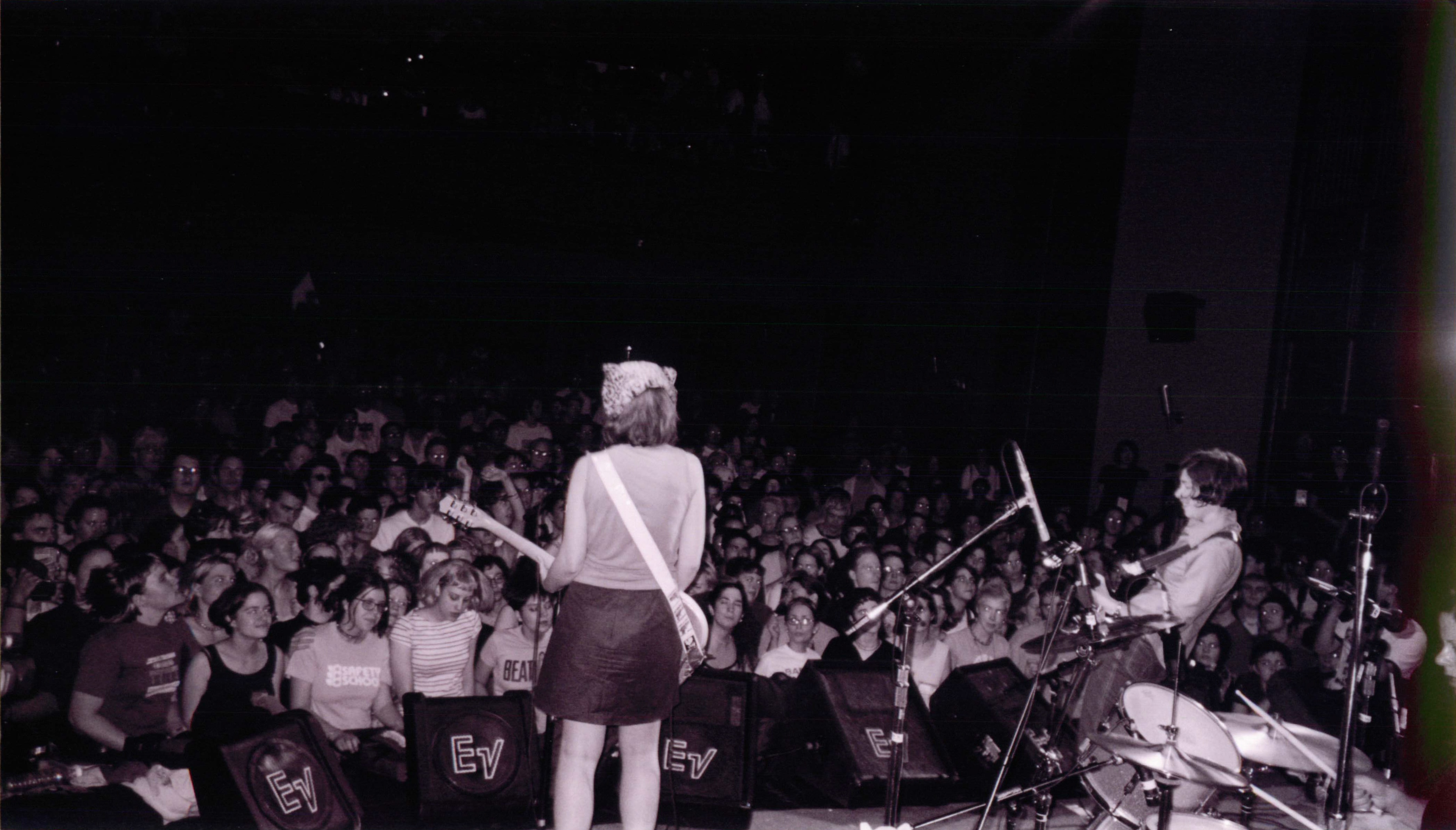
Main Image: Sleater-Kinney [Credits: Pat Castaldo / Flickr] (found on: https://commons.wikimedia.org/wiki/File:Sleater-Kinney_at_Yoyo_a_Gogo.jpg)
"When she walks, the revolution's comin'
In her hips, there's revolution
When she talks, I hear the revolution
In her kiss, I taste the revolution"
- ‘Rebel Girl’, Bikini Kill
Angry girl music hasn't disappeared because anger is gone, but because music prioritizes more controlled, aestheticized forms of emotion. Rage has been softened; we rarely hear girls fighting back in their music anymore. Lyrics have moved away from confrontation. Anger used to interrupt a song – now it’s neatly contained inside it, where it can’t disrupt anything.
We can trace angry girl music through the 70s and 80s with Janis Joplin, Patti Smith, Chrissy Hynde, Siouxsie Sioux, Joan Jett, and more. The cultural moment didn’t explode until the early 90s however, with punk bands like Bikini Kill, Batmobile, Sleater-Kinney, and Heavens to Betsy spearheading the movement.
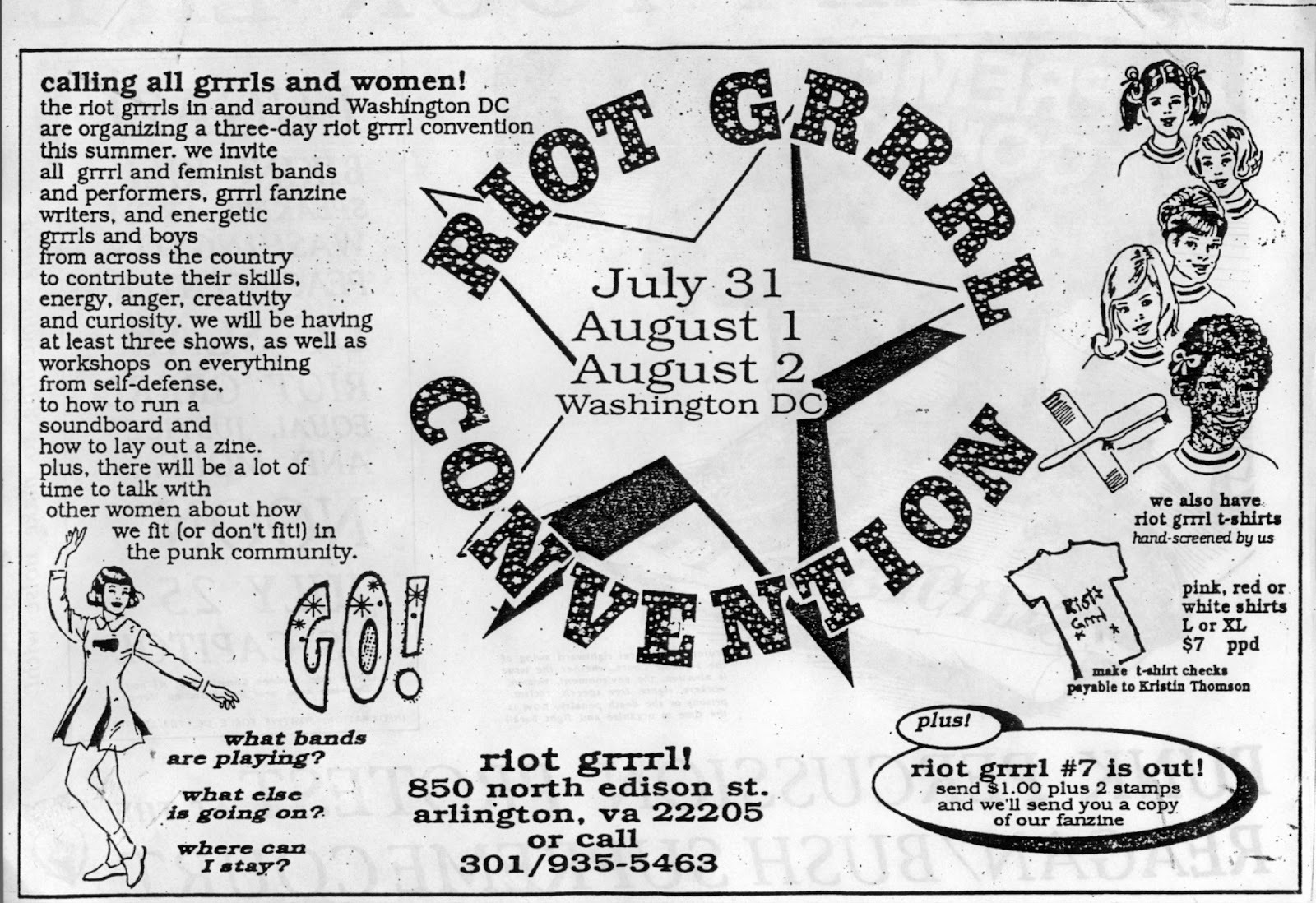
Angry girl music got its start through the Riot Grrrl movement: an underground feminist movement that utilized DIY punk music and blended feminist movement ideals into its sonic character. They railed against societal, cultural, and musical sexism, especially in response to a male-dominated punk scene. They prioritized passion over perfection, with many bands channelling a deliberate amateurism. Anger wasn’t just in the lyricism but permeated across form, production, and performance. That lack of polish was the point, unlike today. It wasn’t just what they said, it was how loudly and imperfectly they said it. That’s what’s been lost.
It went more mainstream with indie-alt influences from Alanis Morissette, Fiona Apple, PJ Harvey, Veruca Salt, Hole, Liz Phair, and Paula Cole. No Doubt brought the theme into the pop sphere with ‘Just A Girl’. The closer angry girl music got to mainstream, the more watered down it became; however, the core message still resonated. Visibility came at the expense of volatility.
"Is this the rag you use to humiliate me?
Cause I was born, I was born a girl
Is this the rag you use to humiliate me?
Cause I was born, I was born to bleed"
- ‘My Red Self’, Heavens To Betsy
Heavens to Betsy implicated the listener, making the personal political.
"And I'm here to remind you
Of the mess you left when you went away
It's not fair to deny me
Of the cross I bear that you gave to me"
- ‘You Oughta Know’, Alanis Morissette
Morissette made the pain of betrayal inescapable.
"Take this pink ribbon off my eyes
I'm exposed and it's no big surprise
Don't you think I know exactly where I stand?
This world is forcing me to hold your hand"
- ‘Just A Girl’, No Doubt
No Doubt poked fun with ‘Just A Girl’, smuggling a serious critique into something commercially successful.
Angry girl music wasn’t sanitized. It was an unapologetic expression of female rage, disappointment, and frustration. There was imperfection and palpable rage in every rasp, wail, and shout. It lingered; a communication of rage that you didn’t just understand but could feel. It transcended lyricism. Bikini Kill and Sleater Kinney put emotional intensity and catharsis at the core of their music. Jagged Little Pill (1995) was so resonant because of the unadulterated rage and hurt you hear in Alanis Morissette’s voice. That embodiment is what’s missing now; it’s polished out before we can hear it. We lose identity, solidarity, and action. There’s a resurgence of modern listeners reaching backwards to 90s angry girl music for this reason – not purely out of nostalgia but because it offers something that contemporary music lacks.
The name ‘angry girl music’ carries gendered connotations itself. Shrew, bitch, harpy. If you search ‘angry boy music’ nothing substantial comes up. It simply doesn’t exist as a label. The music of Nirvana, Nine Inch Nails, Rage Against The Machine, Fugazi and even Tupac Shakur, wasn’t labelled ‘angry boy music’ and yet that’s what it explored in so much of their respective discographies. Their music was dubbed raw, gritty, and in turn, genius. This framing allowed male singers to explore rage without being boxed in, without their music being reduced to one emotion and topic.
By contrast, angry girl musicians – like Heavens to Betsy, Batmobile, Liz Phair, Hole, and more – were dismissed as difficult, hysterical, too much, angry. Even just reducing the music of these musicians to the label ‘angry girl music’ reduces their depth and range. It wasn’t just rage; it was disillusionment, frustration, heartache, rebellion, emotional intensity. The label doesn’t just describe it, it diminishes it. This distinction highlights the social discomfort that appears when women use their voices and speak up and out. Their open expression of anger derails the expectation of the gendered, conditioned role of caregiver or peacemaker. It’s easier to trivialise this music than engage with; anger is rebranded and dismissed before it can threaten the status quo or upset patriarchal order.
Angry girl music has mutated in a modern landscape because pop lost its patience. We don’t have the paragons of pop music giving us albums that make us feel their rage and frustration. We’ve erased rasp, rage, and imperfection. It’s not that artists can’t be angry – it’s that they can’t be angry in a way that feels disruptive, messy, or inconvenient.
You can hear angry girl music influences in Olivia Rodrigo’s discography. She plays with it in ‘all-american bitch’.
"And I am built like a mother and a total machine
I feel for your every little issue, I know just what you mean
And I make light of the darkness
I've got sun in my motherfuckin' pocket, best believe"
Yet her delivery is more restrained. You can hear the anger, but there’s no physicality behind it. It’s more angsty than angry.
Billie Eilish’s soft vocals on ‘What Was I Made For’ really lack the punch that Fiona Apple would’ve given the song – it is a beautiful and powerful song, but melancholic. Fiona Apple’s rage permeates throughout ‘Get Gone’ and you ride that rage with her. It exists beyond the song. Eilish refuses to let that anger surface.
Ironically, where Gwen Stefani and No Doubt brandished the phrase ‘I’m just a girl’ to critique limitations and stereotypes pushed on women and their infantilisation, it’s now used in TikTok trends to reinforce those very same sexist ideas about women being too dumb or precious. Without palpable – political – female rage in the charts, we’re regressing.
Anger hasn’t wholly disappeared but it’s muted now, contained within moderated lyrics and soft vocals. We don’t get to embody that anger. We don’t get to share a collective release. This isn’t accidental. Where is our generation’s Jagged Little Pill?
In the 90s, angry girl music was peripheral – it was weird, abrasive and uncomfortable in its confrontation. For the Kat Stratfords of the world. Yet, despite its relegation to the underground, it had space to exist. Anger in women is still seen as abrasive, but we don’t have an underground for angry girl music to thrive in. Our third spaces are digital, which flatten and commodify these challenges that angry girl music fought against. The anger is still there, but it’s no longer allowed to sound like anger.
The 90s made space for counter-culture within music. Angst and anger were culturally dominant – just think of the meteoric rise of Nirvana under the grunge sub-genre, or the underground rave-culture fuelled by electronic music, or even the gangsta rap sub-genre that artists like N.W.A, 2pac, and Dr. Dre dominated. Anger wasn’t marginal – it was mainstream, and it was profitable. Today, that dominance has been replaced by something smoother, more digestible.
In wider music trends, we’ve moved towards a preference for digestible, ‘vibe-able’ music. Anger isn’t loopable in an era of playlisting – it’s too disruptive. It’s too isolating. We say we want honesty, but we stream what’s easiest to sit with – whatever that looks like to us as individuals. A lot of these genres have been pushed aside during the commercialization of music in an industry increasingly concerned with image and virality. Anger is less marketable when music becomes a means of escape instead of a mirror to uncomfortable truths. There isn’t one single force behind this; it’s a feedback loop between industry, audience, and platform, each shaping and softening the other.
But what do we lose without this genre? It was cultural and political. Angry girl music provided catharsis and community and gave a tangible voice to resistance. When we lose this, we lose a facet of emotions that women are allowed to express publicly. We lose a language for anger. We lose a way of recognizing it within ourselves. We lose community in order to be compliant. We lose permission to feel loudly. And when anger is softened in music, it becomes easier to ignore everywhere else.
The original movement was born of a visceral, collective response to sexism in every area of life, from the punk music scenes dominated by men, to the sexualization of women in media, to the Christian Coalition’s Right to Life campaign against legal abortion and the Senate Judiciary Committee’s proceedings with Clarence Thomas and the mistreatment of Anita Hill. The conditions that created angry girl music haven’t disappeared by any means: the 2021 murder of Sarah Everard in the UK, the 2022 overturn of Roe v. Wade in the US, the rise of Andrew Tate and online misogynistic rhetoric, Gisèle Pelicot’s 2024 case in France. So why has the sound of that anger flattened?
The question isn’t where angry girl music has gone, but why we only tolerate it once it’s been softened. Maybe it hasn’t disappeared, but we’ve stopped making space for it. We’ve taught it not to bite.
If you enjoyed this article, sign up for our newsletter and follow us on Instagram and LinkedIn to stay up to date with Gen Admission 🎶


