Fangirls
March 29, 2026
.png)
Designed by Nareh Nersisian
People aren't born into the Khia Asylum. When artists stop serving hits and enter their flop era, they start serving time in the Khia Asylum.
The Khia Asylum is a stan culture term referring to a metaphorical “prison” that pop stars are sentenced to after losing relevance from initial success. As the term is becoming popular online, it's beginning to lose its meaning – let’s analyze the discourse around it.
This term was named after American Rapper Khia Shamone Finch, whom you may know from her single 'My Neck, My Back (Lick it).' As she is often considered a one-hit wonder, Khia became shorthand for an artist whose mainstream relevance quickly faded after a big hit.
Personally, it reminds me of another internet term, cheugy, meaning "someone or something that is outdated, unfashionable, or trying too hard to be trendy." While cheugy is used to describe fashion trends that have become outdated, Khia is used to describe pop stars who have "flopped."
The term has re-entered pop culture, with entire TikTok accounts "reporting live" from inside the asylum. Stan Twitter, pop fandoms and meme accounts are the ones found guilty of using it. Artists such as Ava Max, Rita Ora and Sam Smith are frequently cited as having served, or continuing to serve, sentences.
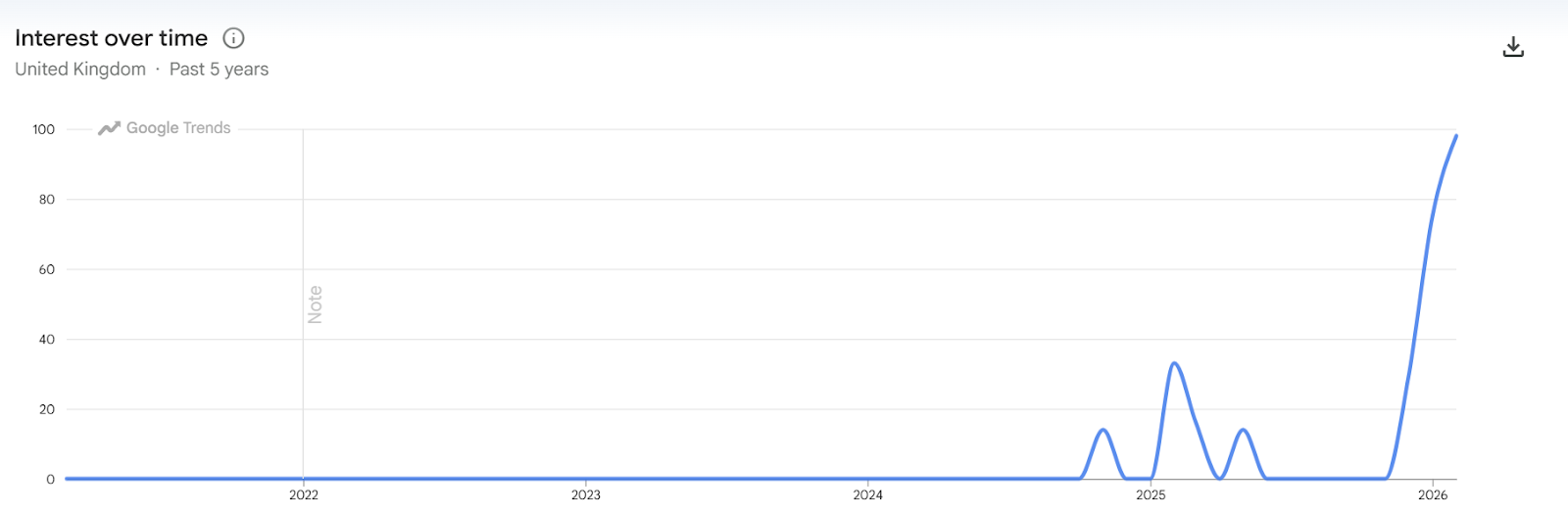
On the surface, a lot of the content is light-hearted and aims to provide comic relief, but whether the chronically online young adults using the term are true music fans, or just capitalizing on an opportunity to spread gendered criticism under the guise of humour is still up for debate.
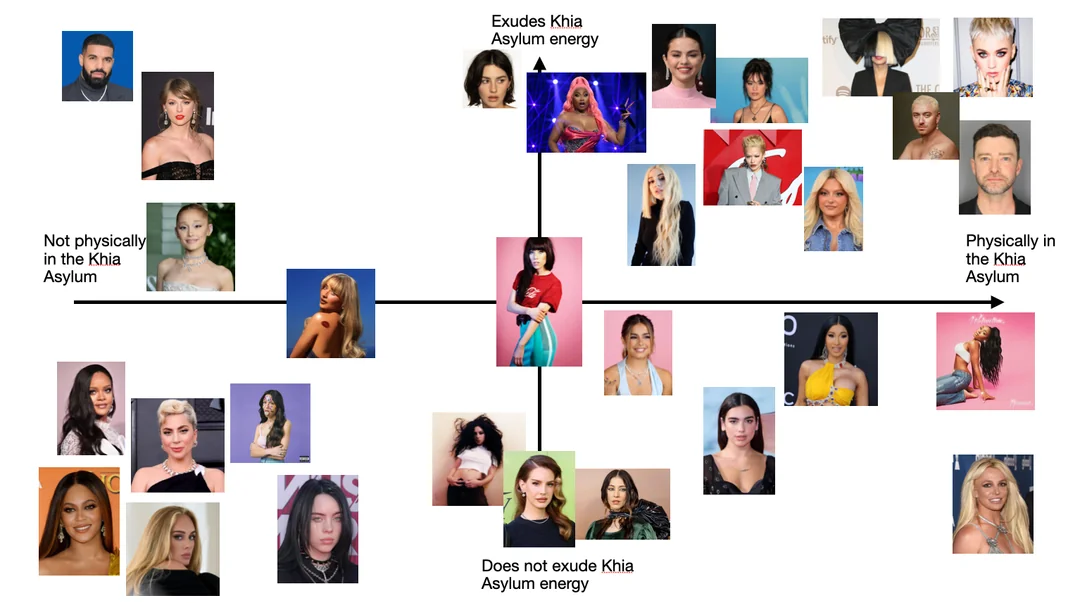
As we live in an era defined by the attention economy, Khia Asylum inmates are characterised as artists who typically don’t meet audience expectations, or aren’t doing enough to maintain the public’s attention. One can break down entry routes into three categories:
Artists get sentenced to the Khia Asylum after losing relevance or after a period of poor commercial success. This is often someone who has a stratospheric hit but never achieves a follow up high. They had a lot of eyes watching, anticipating sustained momentum, and when this didn't come to fruition, they received a life sentence. Two examples are James Blunt ('You’re Beautiful') and A-ha ('Take on Me').
This also goes for industry plants that received a lot of resources and backing from the industry but have nevertheless failed to reach a “breakout” moment, like Madison Beer.
A major change in an artist's image can put someone in the Khia Asylum.
Take Katy Perry for example: the combination of a poor album, a collaboration with Dr Luke (the producer accused with sexual assault of Kesha), and an out-of-touch space exploration tarnished her career highs. People now view her as “cheugy” or “cringe” as the image that once made her cool has become outdated and she hasn't evolved with the culture.
This can come as a result of one of two things - either a series of albums becoming less and less successful, or audiences being aware of a star but without truly being engaged or interested in their career. This can be seen with the likes of Rita Ora and Bebe Rexha.
At the heart of the Khia Asylum is the very real possibility of breaking out, which is far more fascinating to look at. After all, everyone loves an underdog. Sometimes you just need one hit single: take Sabrina Carpenter's 'Espresso' during summer 2024. However, what secured her release from the asylum was sustaining that momentum with successful follow ups of hit songs 'Please Please Please' and 'Taste.'
An artist taking risks and trying to reinvent themselves would seemingly be a golden ticket out of the asylum, but we can evidently see that is not the case. For example, Camila Cabello with C,XOXO, her 2024 album that targeted the ‘party girls and gays’ failed to connect with audiences, leaving her locked in the Khia Asylum.
Many considered Zara Larsson to be locked in the Khia Asylum until recently, as nothing had quite lived up to her early career highs. However, impressive live choreography, a viral feature with Pink Pantheress, consistent and identifiable branding, and a 'Lush Life' resurgence has launched her fully into the zeitgeist, and breaking the US. After a long sentence, Zara is now facing her undeniable release from the Asylum.
There is no one metric that determines probability of sentencing or eventual release. Popularity or influence in the pop stratosphere isn't defined by one metric. Streaming numbers do count, but influence on culture, the ability to stay relevant, and cultivating a steadfast fanbase are the most valuable metrics in avoiding the Asylum.
Mobility within the Khia Asylum is not equal. Men typically have far more mobility, as women are put under far more scrutiny and are subject to much higher expectations. Even in popular discourse 90% of the conversation is around female Khias. Not much is being spoken about male flops, when proportionally far less male popstars are succeeding right now compared to over a dozen pop girlies being celebrated.
Some artists are “sentenced” to the asylum while experimenting with sounds that sit outside the mainstream. These artists often operate beyond the expectations of mainstream audiences, but in doing so, cultivate loyal fanbases whose support challenges the narrative that they have “flopped.” In many cases, nothing about the music or the artist’s identity has changed, but the sustained, fan-led support gradually shifts perception and prevents further “sentencing.”
This is true for Carly Rae Jepsen and Charli XCX (prior to BRAT). Both artists started their careers with mammoth pop hits, and then pivoted to more experimental music that nurtured a loyal fanbase.
While fans were loyal to Charli’s hyperpop sound on albums like Pop 2 and Crash, those albums failed to live up to the commercial success of early hits 'I Love It' and 'Boom Clap,' leading stans to put her in the Khia Asylum. However, the release of BRAT in 2024 marked her undeniable release.
While Charli didn’t change her hyperpop, dance-infused sound on BRAT, she was able to engage audiences in ways she had been unable to before, thanks to its marketing. Coining the term ‘brat summer’ and redefining neon green, Charli influenced culture and kept fans talking with her pop-up performances and surprise features. The Charli resurgence is proof that escaping the Khia Asylum is all about relevancy and maintaining attention. Since BRAT, catalogue tracks from Charli’s time in the asylum have also popped off, such as 'party 4 u.' This demonstrates that the music was never the problem, the audience reception was. She broke out of the asylum despite not having a number one album or breaking streaming records. Her influence is being seen in a new wave of artists that are beginning to trickle through, and shows the importance of brand building in establishing a fanbase and relevancy.
Much to escapees’ dismay, release from the asylum may be short-lived.
As Charli XCX said recently in an interview: "Just because you get out once doesn’t mean you can’t go back in."
However some artists are protected from the risks of poor audience reception when they experiment with their sound, as seen with Lorde. When Lorde released Solar Power with lacklustre impact compared to previous releases, listeners raced to categorize it as a flop. Luckily for Lorde, her loyal fanbase and nostalgic hits maintained her popularity and influence, saving her from the Khia Asylum. This shows how the concept is multi-faceted, and revolves more so around an artist’s overall cultural relevance and “coolness” than each of their individual releases.
Overall, mobility is determined not just by gender and chart success, but cultural impact and fan loyalty.
The Khia Asylum discourse has now become so widespread that artists themselves are beginning to reference it directly, effectively breaking the fourth wall between stan culture and the industry it critiques.
Artists like Charli XCX have openly referenced it in interviews, but she can do so from a position of safety, having recently "escaped." However, when someone like Bebe Rexha directly references it despite being considered a "resident," it risks reinforcing the narrative rather than dismantling it.
The Khia Asylum discussion can turn toxic, and Charli XCX's song 'Sympathy is a knife' perfectly describes how this dynamic emerges. It illustrates how so-called fans are often preying on your downfall after you've hit a career high or breakout moment.
'Cause it's a knife whеn you're finally on top
'Cause logically the nеxt step is they wanna see you fall to the bottom
The Khia Asylum is not a productive conversation around pop culture, but rather an excuse to bring down primarily female artists.
An artist's inability to sustain or accelerate momentum in their career has become a punishable offence. Increasingly, the loudest voices in this conversation resemble the dynamics of a stereotypical high school clique. Targeting artists has become a way to entertain each other and the focus of discourse is finding the next victim.
The practice of putting someone in the Khia Asylum brings them more enjoyment than actually discussing why they are there.
Sometimes fans threaten artists with going back, implying they have all the power over their career and turning what started out as a meme into a weird parasocial power-play which makes you beg the question - was this ever about art?
If you enjoyed this article, sign up for our newsletter and follow us on Instagram and LinkedIn to stay up to date with Gen Admission 🎶

%20(2).png)