
Music History
July 8, 2026
.png)
Lilith Fair at The Gorge July 5, 1997 [via Meredith Brooks’ Instagram]
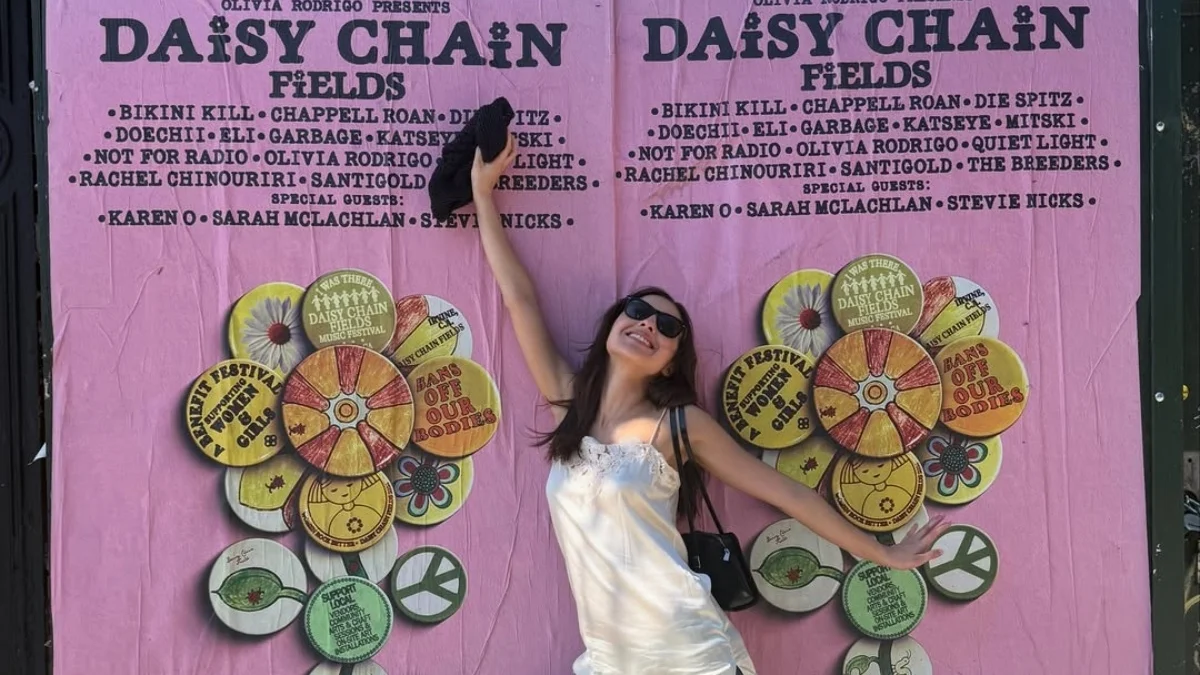
Olivia Rodrigo just announced Daisy Chain Fields (an all-female-headliner festival) on June 22, a clear nod to Sarah McLachlan's Lilith Fair in the 90s, so it feels like a good moment to talk about where we're at with female representation in festival headlining.
We're also heading into peak festival season (and whilst Glastonbury is missed, there are lots of other festivals going on right now), so it's already part of the cultural conversation again, especially around how few female artists actually headline major festivals. Even now, the stats are still pretty stark, which makes Olivia's move feel both exciting and necessary.
According to Book More Women, women made up only 22% of booked musicians at major U.S. music festivals in 2025, despite some of the most talked about artists right now being women: Taylor Swift, Sabrina Carpenter, Charli XCX, Billie Eilish to name a few. These artists aren’t niche; they are actively shaping industry conversation. Time and again, these artists sell out shows, yet there’s still the resounding assumption that women don’t sell; that they’re risky, because they often cater to the ‘wrong’ audience: other women.
Time for a little history lesson. Enter Sarah McLachlan – she’s likely to be recognised for lending her voice to Toy Story 2’s song, ‘When She Loved Me’ (1999), or her best-selling album, Surfacing (1997). But she did something much more vital than those accomplishments.
In the 90s, McLachlan was told that playing two women back-to-back on the radio was too much. That same logic permeated throughout the wider industry; promoters operated under an unspoken assumption that booking multiple women on the same bill (dismissively dubbed the 'pussy package') was ticket suicide. The belief that female headliners couldn't coexist without hurting sales was simply taken as fact.
So, in a ground-breaking act, she put together Lilith Fair, an all-female festival. It began in 1995 with just Paula Cole opening for Sarah McLachlan on tour. It expanded in 1996 to a trial run of 4 shows with other female acts and it sold out, spurring a major touring festival of 40 shows in 1997. The inaugural show was at The Gorge in Washington state. 15,000 people showed up.
It was graced by names across its three-year run that were already, or went on to become, household names: Suzanne Vega, Sheryl Crow, Tracy Chapman, Jewel, Missy Elliott, Erykah Badu, Sinéad O'Connor, Monica, Indigo Girls, Lisa Loeb, Christina Aguilera, and Fiona Apple. The tour donated millions to charity and inspired women across every level – performers, roadies, technicians, audiences. It wasn't perfect, and its commitment to diversity deepened more meaningfully in its second year, but Lilith Fair was never just a lineup. It modelled what a festival could be.
Of course, it wasn't without its issues – attracting vitriolic and dismissive press, dubbed ‘Girlapalooza’, ‘Lesbopalooza', 'Breast-fest', among other nicknames – but as critic Ann Powers put it, it was simply because it was ‘aimed at the wrong people. Aimed at regular women’.
And regular women, it turns out, are music's most overlooked audience – despite fangirls having launched the careers of countless legends, from The Beatles to Harry Styles. They are rarely afforded the cultural credibility of tastemakers, even when they are the ones doing the taste-making.
Lilith Fair broke industry standards and was a symbol of hope for so many people because it proved so publicly that the music industry was wrong for underestimating and undervaluing female headliners. It became a symbol for women both on and off the stage by becoming one of the biggest touring festivals in the world in a male-dominated industry in the 1990s.
Despite Lilith Fair proving demand existed, the industry mostly returned to the old formula. The years post-Lilith-Fair, in the early to mid 2000s, saw heavy festival reliance on male-fronted rock and Britpop acts. Major festivals continued the drought of female headliners. Lilith Fair proved audiences will show up for women — so why are huge gender disparities at major festivals still abundant?
Take Glastonbury, for example. Sinead O’Connor headlined in 1990 after Suzanne Vega was the first female headliner in 1989, yet Glastonbury didn’t have another female headliner until 21 years later when Beyoncé performed in 2011. However, Glastonbury does make a conscious effort to have a festival-wide performer gender split. 2024 was the first time the festival had 2 out of 3 main headliners as women, with Dua Lipa and SZA taking centre stage, after 54 years.
In 2014, Lily Allen's last-minute slot filling in for Two Door Cinema Club at Latitude was the only thing standing between that summer and zero women headlining a major British festival. Over a decade later, there’s been some progress, but not enough, as female solo artists and bands still account for just 21% of acts across British festival lineups. This year, BST Hyde Park has eight headline slots across its run, yet not a single one is led by a woman. There are women on the lineup, but none in the festival's top-billed positions. It's dispiriting enough when a festival has three headline slots and none go to women; when there are eight opportunities and the outcome is the same, it feels even harder to justify.
.png)
But there were still pockets of hope that pushed back against this. In 2000, Ladyfest, a global music and arts festival for feminist and women artists, began. And in 2005, Sugar Water Festival led by Erykah Badu, Queen Latifah and Jill Scott, was dedicated to African-American women and inspired by each artist performing at Lilith Fair.
It feels like Daisy Chain Fields is the breath of fresh air the industry needs.
Daisy Chain Fields is Olivia Rodrigo’s love letter to the music industry and to the very artists who have inspired so much of her music. With a jam-packed lineup of current female artists from Rachel Chinouriri to Doechii to Chappell Roan to Die Spitz, and the legendary powerhouses Bikini Kill, Sarah McLachlan, Stevie Nicks, and Karen O appearing. Where Lilith Fair was women creating space because they weren’t being given one, Daisy Chain feels like women celebrating the space they’ve carved out.
Unsurprisingly, it sold out in under 30 minutes.
I hope Daisy Chain Fields is a success. I hope Olivia Rodrigo channels Kathleen Hanna and wears as many babydoll dresses as she wishes and, I hope it haunts every promoter who ever said women don't sell.
If you enjoyed this article, sign up for our newsletter and follow us on Instagram and LinkedIn to stay up to date with Gen Admission 🎶
.png)
