
Artist Development

May 26, 2026
Universal Pictures
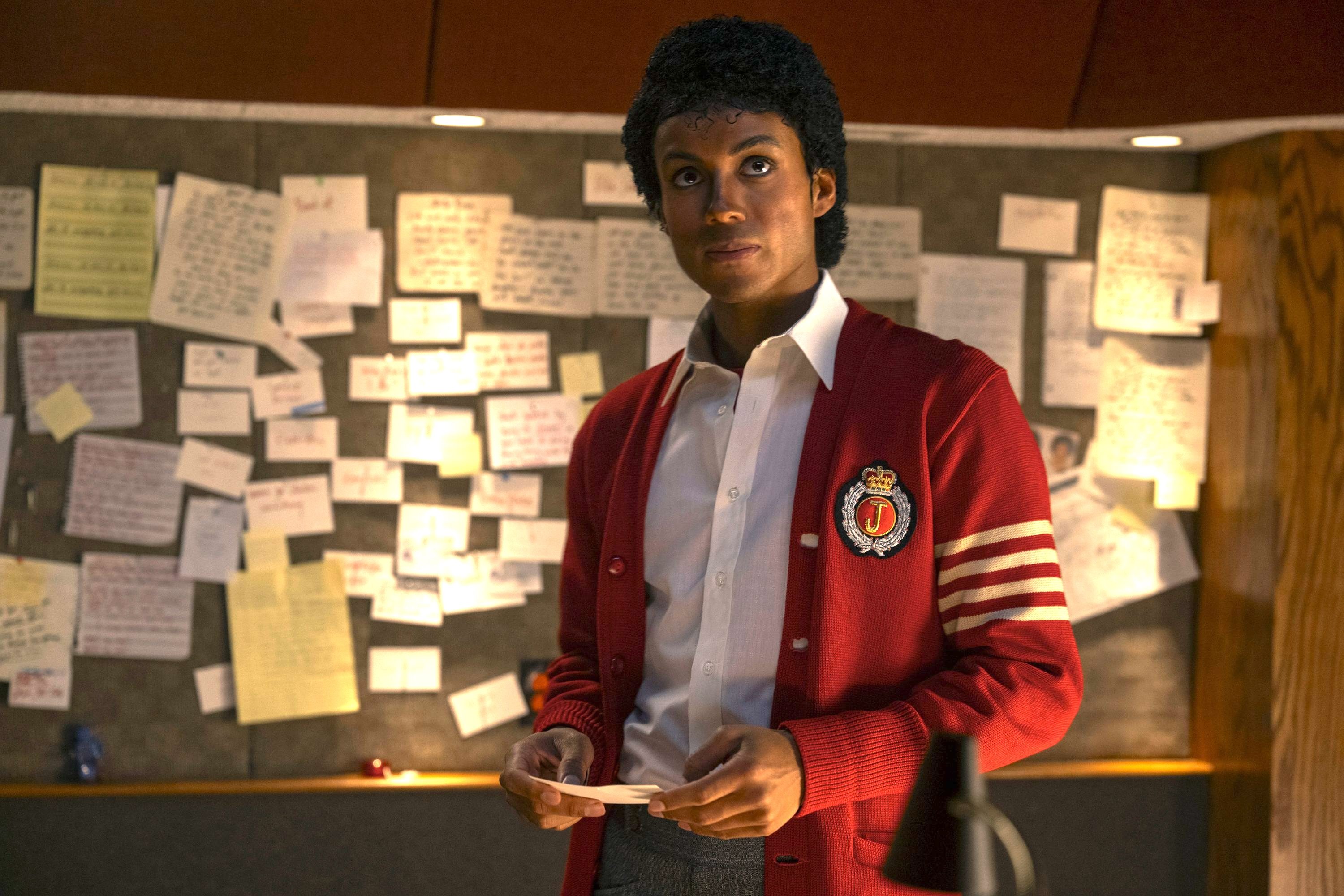
I know Spotify Wrapped is far away, but I’m almost certain that my most played song of this year is either going to be ‘Don’t Stop ‘Til You Get Enough’ or ‘Workin’ Day and Night,’ thanks to Antoine Fuqua’s Michael biopic.
The film is an absolute treat for superfans of Michael Jackson. At times, it beautifully depicts the intricate musings behind a highly publicised tragedy. We see Michael’s delicacy, perceptiveness and shrewdness within the quiet four walls of his childhood home, estate and infamous boardrooms - not just in clunky press junkets or poorly conducted interviews. It takes us right into the inner workings of an exceptionally talented and sensitive mind, dealing with complex ambivalence caused by an innately remarkable level of virtuosity and deeply rooted trauma. ‘Michael Jackson’ - both as a commercial entity, and once, a boy whose origins are bell-bottomed jeans walking streets of the industrial midwest - is something that the world wasn’t prepared for, and hasn’t seen since. An enigma. At its core, the film very successfully delivers its purpose, which is to have each and everyone leave the cinema moonwalking (in your imagination if you’re too shy, or literally, if you’re like me).
I went into Michael with vague, undecided expectations, unusual for me, when watching biopics in a cinema. Having previously worked in Sony Music’s catalogue label, which cemented my love as a fan, I thought my observations and feelings would be singular. I was quite wrong. There are things I absolutely loved about this movie, and then things I felt were missing. Either way, the film’s success is undoubtedly defined by the music.
Michael Jackson lives on and reaches new heights with this movie. Michael became Spotify’s Top Global Artist this month, a first-time title for him, 17 years after his death. He also recently topped Billboard’s Artist 100 with the unbeatable Billie Jean, making him just the sixth artist to ever reach this title posthumously. When Lionsgate released the trailer (just over one minute long), it amassed 116 million views in the first 24 hours - more initial traffic than trailers for The Eras Tour (96m), Bohemian Rhapsody (57m) and A Complete Unknown (47m).
Jaafar Jackson’s metamorphosis into the King of Pop is almost supernatural. He inhabits every fiber of Michael in this movie. In ultra-kinetic stage sequences that revive Michael’s magic, you’re simply possessed by the sounds and silhouette of an icon, and it’s rather easy to forget that you’re not actually watching the popstar himself. This is done particularly well through the perspective formatting, which often fluctuates between in-audience, digital and side stage - there’s no way in which you aren’t immersed in the music. Moviegoers have been experiencing impromptu dance parties at the front of the auditorium. I think it’s fair to say nobody else would have been better suited to play Michael in this film. This persists beyond Jaafar’s role, as evident in the press run. The mystical bond that you see in The Jacksons’ earlier years is still here somewhere in the ether - Jaafar’s demeanour on and off screen makes you realise it’s closer than you think. It provides relief from the sense of loss.
Also, less relevantly, I still have no idea how Katharine Jackson did this:

The first third of the film is the most artistically successful. Here, we’re a visiting neighbour, joining a bustling dinner table hosted by the Jacksons of Jackson Street. It’s this crucial setup that gives us a window into the struggles of young Michael reckoning with his talent. The film sometimes conflates Michael’s sweetness and sensitivity with an obliviousness. I don’t agree with the idea that his shyness deterred Michael’s self-awareness, or his ambition. For Michael, these sensibilities co-existed off the charts, and it’s largely what made him such a visionary performer. As a child fearing his fathers striking for a misstep, or an adult fearing the consequences of committing to solo artistic development, Michael is always forced to walk around with a guilty conscience hanging over his head. Despite this, there is no point at which Michael Jackson doesn’t know what his talents are, or why he’s pursuing them. In fact, Michael openly shared he knew he was ‘born to dance’ unlike others. His key influences included Sammy Davis, Fred Astaire, James Brown and Bob Fosse, ‘It always came natural for me. Whenever I was little, any music would start and they couldn’t sit me down, they couldn’t tie me down actually. And even to this day, if somebody plays a beat, I’ll start kicking in and making counter rhythms to the beat I’m hearing. It’s just a natural instinct’. He knew alright. But perhaps ‘knowing’, without the discipline of a militaristic Joseph Jackson breathing down your neck, is what makes or breaks the rest.
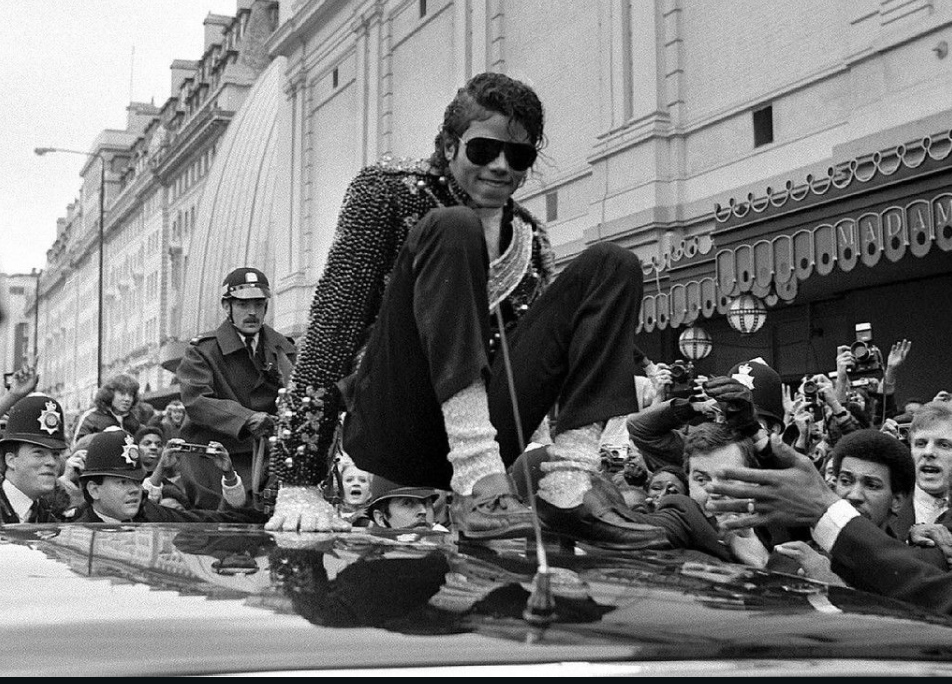
We watch Michael bring warring factions together in March 93’ on the set of Beat It, play a game of Twister with Bubbles, climb on cab roofs, wave at fans whilst bound to a stretcher with third degree burns, and self-reprimand after Motown 25 (a level of perfectionism I don’t think I want to understand). It’s a lot to take in, and at times, difficult to watch. In some parts, the narrative struggles to effectively make the two-hour runtime, appearing disjointed and ineffectual. Nevertheless, as effective biopics always do, the pain of this old wound is something that MJ fans will want to revisit. Packed with superb, blended versions of his (& The Jackson 5’s) very best tracks, we see the playful, distilled side of his character as well as a mogul of the music industry and the global stage. The film addresses the individualistic science behind some of the best lyrical storytelling in history. It also shows us what naturally exercised wit and charisma looks like (I only said that because I really wanted an excuse to include this mesmerising video).
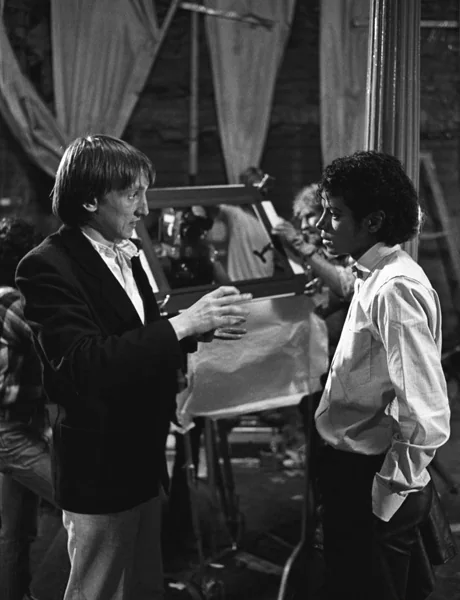
Whilst I’ve been writing this piece, I thought a lot about the creative process, as mentioned in my piece from last month (Industry & Creativity: Think Like Pharrell). There is a tapestry of the interpreted ‘creative process’ woven throughout this film, which was probably my favourite thing about it. We see Michael in his own ecosystem of creative solitude, away from all the commotion, and how he constructs his environment to maximise his creative performance. We’re invited into his genius, as he records and composes simultaneously, his movement and vocals leading - only suggesting the addition of musical instruments. His loafers slither down spiral staircases in the dead of the night, pacing back and forth in his Hayvenhurst Estate studio, pinning post-its and switching out tracklists. This happens as we hear the first percussions of hit tracks from the iconic Thriller album. We’re then transported to the on-site production scenery of the title track, an enduringly distinctive moment in music history. Here, we’re invited to understand Michael’s natural aptitude as a collaborator, harmoniously exercised alongside his individual talents.
There is a fantastic essay by American Author Peggy Schalan, which speaks to the systematic musicology of Michael Jackson’s music - which is basically the methodology behind what made him the greatest entertainer of all time (no debates allowed), through appropriating and transforming. Jackson’s life was stratified - by the media, but also organically, having been thrust into public consciousness at the age of just 5 years old. The complexity and nuance of his personal experiences and artistic development cause an exactitude that no other artist has been able to replicate. It is this balance that makes his discography the universally connectable centrepiece.
Michael was a hybrid, and a shooting star. Schalan says that Michael’s voice ‘captures something… ‘objet petit a- “something from which the subject, in order to constitute itself, has separated itself off as organ”’. From adolescence, between falsetto and contralto soprano, and into adulthood through ‘a futuristic appeal and a reverse hauntedness’, Michael commanded his own atomic structure. He borrowed, but never copied. He has artistic affinities, but can never be compared. He cut straight through identity politics to create his impact with audiences. Michael’s labour (dance, sound, ‘movement’) is delivered from the inside out - this is the opposite of what we typically see now, largely because social media rewards mediocrity more often than real talent. This is also because he ‘came to be’ as an artist at a very specific time; it’s actually hard to understand his cultural legacy, because he industrialised the artist-as-enterprise model, whilst embodying and transcending political and social barriers.
Will we ever have another Michael Jackson? History and its associates tell us no, but goodness, weren’t we lucky whilst it lasted?
If you enjoyed this article, sign up for our newsletter and follow us on Instagram and LinkedIn to stay up to date with Gen Admission 🎶

.png)