
Music History

August 7, 2026
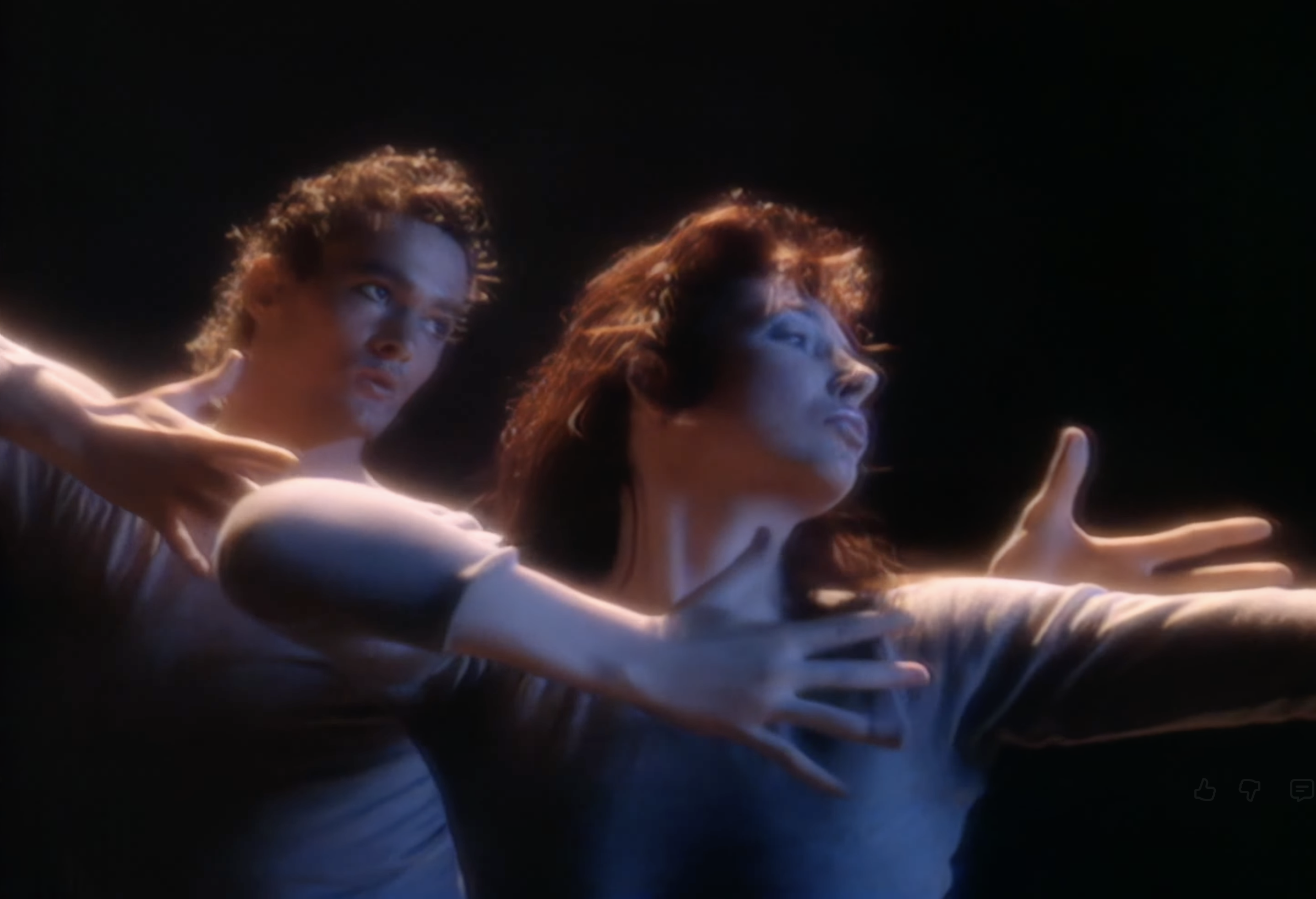
Still from ‘Running Up That Hill’ MV by Kate Bush [WMG]
The first song on an album is a strange thing. It has a very specific job: introduce the artist’s world, establish tone, and tell you what you’re about to hear. But some openers escape that role and end up becoming their own cultural moment. Looking across different eras, you can see how certain openers end up standing in for a whole feeling or generation, not just the album they're attached to; they build whole, tactile, abstract worlds. So, here’s a semi-chronological look across five decades of artists whose opening tracks were ones that had something to say.
‘Gloria: In Excelsis Deo’ is a masterclass in introducing an artist, their sound, and a point of view, all in one go. ‘Jesus died for somebody's sins but not mine’ is probably one of the greatest opening lines in music. One that still lands today.
‘Gloria’ opened what is one of the most influential albums of all time. The song helped set up punk, poetry, femininity, and rebellion, which ultimately defined Horses’ sonic journey. Nearly six minutes long, it was a heavily rewritten cover of Van Morrison and Them’s song ‘Gloria’ (1965), combined with Smith’s 1970 spoken-word poem, ‘Oath’. It explored freedom, religious reclamation and defiance, and outsider rage, while turning the original on its head to explore female desire. From its opening moments, with its dark half-recited delivery and hypnotic cadence, ‘Gloria’ leaves little confusion over how Smith was dubbed the ‘high priestess of punk-poetry’.
Reclaiming an existing rock song was itself revolutionary, but by rewriting ‘Gloria’ Smith opened new possibilities. Ones that gave permission to women in rock to be confrontational. It was a pioneering milestone of punk as it redefined male-dominated rock.
Hounds of Love was an experimental, passionate, high-concept album that explored the complexity of human nature and transformation. Opening with ‘Running Up That Hill’ only makes sense. It immediately establishes the album's themes of empathy, identity and transformation; an opener ahead of its time that proves the opening track of an album isn’t fixed to an era. It deviated from pop norms, asking for emotional understanding from within abstract concepts that Bush rendered innately personal.
A song that explores perspective and misunderstandings, it has an enduring relationship with pop culture that transcends generations. It has become bigger than the album without eclipsing it. ‘Running Up That Hill’ and Hounds of Love introduce a deeply instinctive kind of femininity. It is mystical, vulnerable, and intellectual. Hounds of Love was very much an album of an artist in their element that has never lost its artistic significance.
As an opening track, ‘Running Up That Hill’ announces that imagination and emotion will coexist across Hounds of Love. The tension between intimate lyrics and immense sound – the repeated plea of ‘make a deal with God’ set against the relentless Fairlight synth pulse and drum pattern – makes the song feel emotionally expansive. Its sonic world matches up to its lyrical one, elevating a fairly ordinary relationship problem into something almost cosmic. Its emotional resonance allowed it to be rediscovered by an entirely new generation of listeners after being spotlighted in Stranger Things in 2022. The resurgence saw the song surpass one billion streams.
‘Running Up That Hill’ creates an emotional space that shifts what can be imagined within a song. Its surrealism makes the song timeless; Bush exposed the way women in pop could use mythology and abstraction.
A cornerstone of 1990s alt-rock ‘angry girl’ music, ‘All I Really Want’ was an opening scream of a culture shift that immediately rejected the polished female pop star image. Marked by wailing harmonica riffs, distorted guitars, whiny vocals, and piercing, confrontational lyrics, it was sonically unpolished – almost abrasive. Twenty years later, Morissette took Smith’s confrontation and let it curdle into something messier.
It set up an album about female experience that became a generational lexicon, permeated with anger, frustration, and contradiction. Jagged Little Pill is an album that refused to be easy to consume. It is a truthful snapshot of life’s messiness: the pain, the growth, and empowerment that comes from self-awareness. Within one song, Morissette flips from vulnerable to sarcastic to demanding, and back again. It’s what makes ‘All I Really Want’ still resonate today and speak to so many women.
It still stands out culturally for legitimising the messiness of female emotion and screaming it out through an album that, aside from becoming a commercial success, became part of a wider, recognised genre-defining movement: angry girl music. ‘All I Really Want’ is the perfect, emotional introduction to the album. It feels less like an invitation than a dare to keep listening, throwing the listener headfirst into a world of emotional contradictions. Its legacy isn't just in the artists it influenced, but in the emotional honesty it made space for in mainstream pop.
Pure Heroine is an album that defined an entire generation (particularly the Tumblr subset of it). It spoke to disillusionment – especially a disillusionment with newfound fame. ‘Tennis Court’ doesn’t just introduce the album; it introduces a whole aesthetic, language and perspective. It centres on world-building with its detached lyricism and anti-glamour and nostalgia. Lorde brought a certain teenage make-believe to the album that ‘Tennis Court’ personifies.
‘Tennis Court’ doesn’t follow typical pop lyric convention; it is almost suspicious of success. It’s a song full of contradictions: young but cynical, successful but detached, glamorous but anti-glamour, ambitious but sceptical of ambition. The song is symbolic of a very specific kind of youth. One marked by suburban boredom and performative coolness. Pure Heroine was the pinnacle of 2013 internet culture and ‘Tennis Court’ embodies that; wanting to be seen while also being uncomfortable with being watched.
Arguably Pure Heroine was one of the most influential albums of 2010s pop, and ‘Tennis Court’ spearheaded that charge. Lorde wasn't just making music for teenagers; she was capturing a very online way of existing, a cultural mood. It was genuinely weird and gave voice to an entire generation: ‘we're so happy even when we're smiling out of fear’. It was one of the earliest albums to fully engage with internet culture and shape it, playing with minimalism, fashion, and irony. She changed what cool could sound like.
This is the first track on my list from an album that isn’t even out yet, but the opening track is already a defining introduction to Adela’s album and sound. So, how can an opener have an afterlife before the album even exists?
Sonically, Adela genre-bends with electroclash, gritty dance-pop, and sharp pop songwriting that criticises and confronts industry exploitation. Her music brings a sonic catharsis to a volatile industry. ‘KGB’ establishes not just Adela’s artistic identity but her philosophy; one that blends innate sensuality with industry criticism and taps into emotional storytelling with a clear creative direction. ‘KGB’ is Adela changing how a young pop star can introduce herself. If ‘Gloria’ gave permission to be confrontational toward rock’s boys club, ‘KGB’ is just a version of that confrontation aimed at the industry itself, rather than a specific genre. There’s a throughline that evolved from Lorde to Adela too; where Lorde was wary of being watched, Adéla is wary of being used.
There’s a deliberateness in her music output which has the foundations of cultural staying power. Beyond numbers, we’re seeing creative evidence, visual identity, intentionality and consistency that audiences are showing up for. Adéla’s carefully world-building.
Every great opener is really just an artist telling you the rules of their world before you’d agreed to play. Horses and ‘Gloria: In Excelsis Deo’ built a world out of poetry, identity and rebellion. Hounds of Love and ‘Running Up That Hill’ were built out of transcendence, desire, and fear. Jagged Little Pill and ’All I Really Want’ built a world that pushed the boundaries of contradiction and emotional honesty. Pure Heroine and ‘Tennis Court’ built one around disillusionment and alienation, dressed up as irony. Adela is building one around ambition and critique in real-time, with ‘KGB’ already functioning as a statement of intent before the full story of the album has been revealed.
Great openers are moments where artists declare themselves. Sometimes we only recognise their importance years later, and sometimes we get to watch that declaration happen in real time.
If you enjoyed this article, sign up for our newsletter and follow us on Instagram and LinkedIn to stay up to date with Gen Admission 🎶


