Trend Analysis
May 7, 2026
Jean Yuzheng Zhang @jeanyuzhengart
A whole new generation has ushered jazz into the contemporary musicscape in various forms and fusions. It’s re-entering mainstream music through genre-fluid pop. This is evident in pop artists’ expanding arrangements, live bands replacing production-only tracks, and performance-led albums becoming more popular. Orchestration and jazz texture are being used as a pop language, and RAYE is a key contemporary example of this shift.
Right now, everyone’s talking about RAYE. She’s a pop artist who doesn’t fit neatly into pop. Her hit ‘WHERE IS MY HUSBAND!’ was released 8 months ago to roaring success; beyond its atmosphere, much of its resonance comes from how ambitious and jazz-inflected it is. It’s just one of many songs released in recent years that feature strong jazz and soul influences that skyrocket up charts and pierce through algorithms.
She is a clear, amplified example of this shift because she builds theatrical, narrative-led albums that centre live instrumentation and integrate jazz, soul, and orchestral music into pop structures.
But who is RAYE? She’s a South London artist who broke through in 2014. She released her debut album My 21st Century Blues (2023) to critical acclaim, and unintentionally soundtracked 2023 with the album’s third song, ‘Escapism’. She’s an artist behind many viral hits, but people don’t necessarily know that it’s her behind them; other major tracks include ‘Prada’ and ‘Worth It’ (featured in the Bridget Jones: Mad About the Boy (2025) soundtrack).
But, why does she represent a shift in what mainstream music sounds like? Her music has always resisted that neat pop label. Her debut album blended jazz, blues and soul textures. It reworked classic R&B through layered vocals, instrumentation, and texture. She defied genres, grouping trip hop heavy ‘Hard Out Here’, with the cabaret-style of ‘Mary Jane.’, and thick jazz influences of ‘The Thrill Is Gone’ within one album. It was an album linked together by narrative rather than genre. My 21st Century Blues, like THIS MUSIC MAY CONTAIN HOPE., also uses spoken intro and outro tracks. It was a very lyrically direct and exciting album.
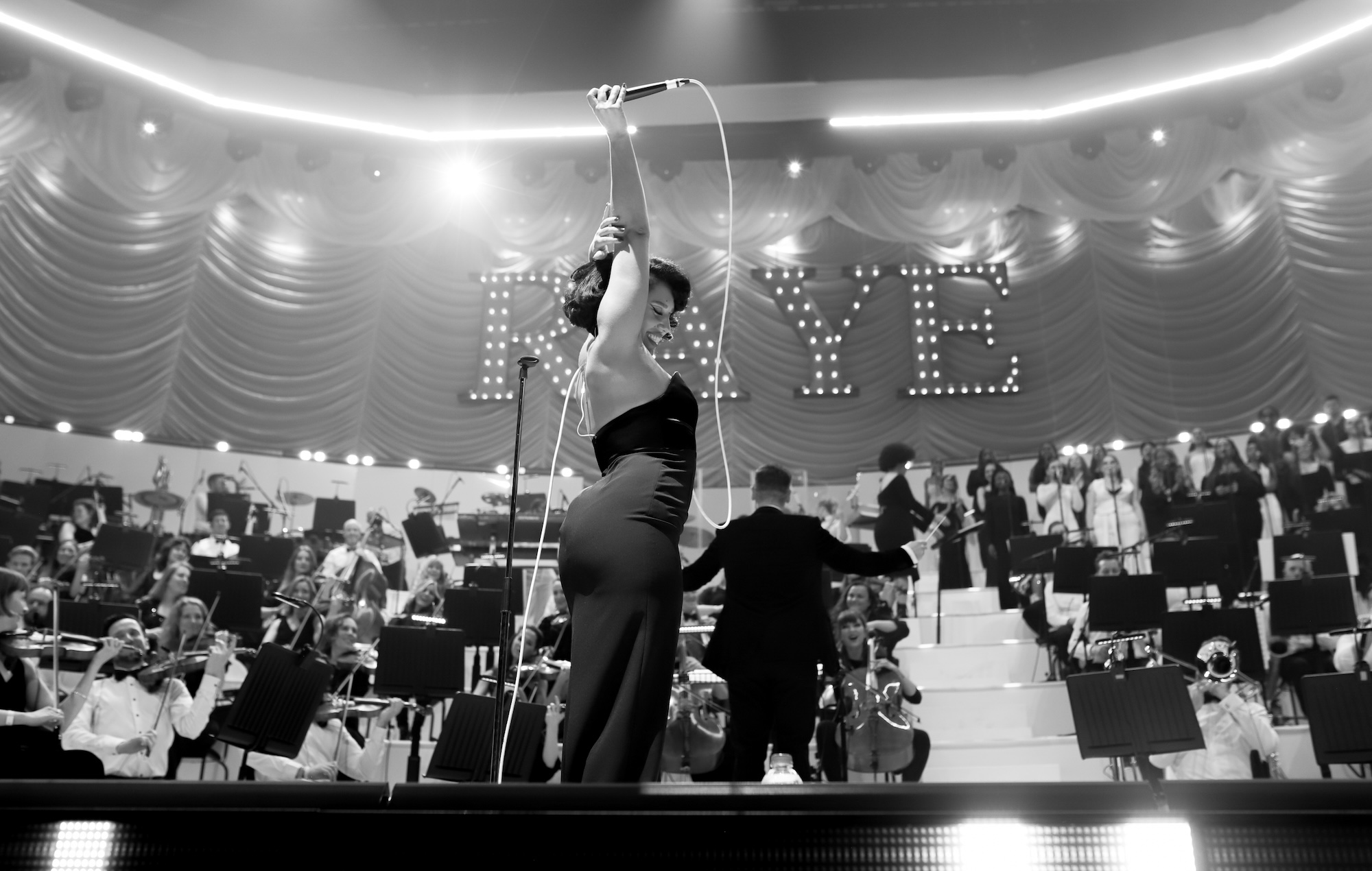
‘WHERE IS MY HUSBAND!’ and her sophomore album THIS MUSIC MAY CONTAIN HOPE. (2026) lean more confidently into this fusion. RAYE utilises a large live band across much of the album. The album focuses on live instrumentation, evident in her live performances of these songs often featuring lots of instrumentalists and huge choirs. It’s a theatrically genre-fluid album, moving from heavy jazz and soul to orchestral arrangements and R&B beats. In doing so, she expands upon what pop can hold.
It's a very artfully experimental album – she crafts her character: the ‘girl under the grey cloud’ clad in a red dress and despair, ‘seven Negronis deep’ – and remains faithful to her throughout the album’s runtime. ‘Beware… The South London Lover Boy.’ is the first song of the album to introduce RAYE’s full-scale backing band. It’s jazzy, satirical, and theatrical with swinging beats and carefully layered, theatrical harmonies. ‘I Hate The Way I Look Today’ also leans into the jazzy fusion RAYE brings to the album. It has the most traditional jazz sound, utilising a wide brass section (trumpets, saxophones, and trombones), bouncy piano, and buzzy drums, as RAYE sings and scats overtop.
For ‘Click Clack Symphony’, she partnered with the renowned Hans Zimmer to piece together aspirational orchestral arrangements. Elsewhere, in an album that seemingly pays homage to jazz and other cornerstones of music, she brings in Al Green, the legendary soul singer, for track ten, ‘Goodbye Henry’. It layers acapella and vocals over a soulful beat, with strings, horns, and keys – such complex layering that has an acoustic, tactile feel. Elsewhere on the album she allows for stripped back performances such as ‘The WhatsApp Shakespeare,’ which blends R&B beats with soaring orchestral arrangements.
It is not an amalgamation of disjointed tracks but rather a cohesive story with ambition, covering resilience with jazzy overtures. RAYE is a musician merging pop songwriting with jazz to become performance-led, drawing on established musical traditions while recontextualising them within contemporary pop. She sits at multiple musical intersections; not wholly committing to one but touching meaningfully on each.
A large standout of this album is that it flies in the face of TikTok run times. Where the industry now rewards short, spliceable, and algorithmic songs, RAYE leads with slow builds with large payoffs, and bridging, indulgent monologues. It’s an album that blends spoken monologues, layered, theatrical harmonies, jazz and orchestral arrangements, and R&B beats. It’s inconvenient, at times unwielding, but entirely compelling.
This is happening for a myriad of reasons we could point fingers at. Some areas of music are embracing the hyper-processed, algorithm-optimised sound of a lot of modern music (such as PinkPantheress, Katseye, and Charli XCX), and with good reason; it’s fun, it’s catchy, it’s energising, it feels like shots of coffee. Other sides are pushing back, responding to more human, more nostalgic sounds in production. These sounds lean into imperfection, surprise, and a form of ‘old-school’ entertainment. They put performance as composition, using albums as theatre rather than playlists, with set design, characters, and narrative arcs.
It’s no secret we’re experiencing a huge wave of nostalgia in music and wider trends right now. It’s part of an AI pushback, especially in music where, ironically, there is an influx of AI-generated music in soul and jazz genres (such as Sienna Rose). Genres rooted in Black musical traditions – ones that foster artistic freedom, emotional spontaneity, and community – are now being used as an early foothold for AI-generated music.
On top of that, there’s been a lot of pushback on artists not matching studio vocals, and so live performance is becoming a part of artists’ identities again and not just for promotion purposes. It allows for a signalling of ‘serious’ musicianship via complex arrangements, vocals, and live bands and performances.
RAYE is just one person who is embracing jazz and live instrumentation. She’s among artists like Olivia Dean, Laufey, Tom Misch, and Jacob Collier. The success of artists like Berlioz and St. Germain, who are predominantly jazz house instrumentalists, also highlights this influx of jazz-influenced music into wider listening spaces.
Olivia Dean just kicked off her The Art of Loving tour, and she’s bringing a rotating four-to-seven-piece band with her, and two back-up singers. Laufey just sang jazz standards at Coachella, a festival that is predominantly known for its major pop headliners. Tom Misch uses jazz as production language; his album Geography (2018) used jazz-influenced chords, and his recent album, Full Circle (2026), leans further into saxophone melodies and polished guitars. Jacob Collier, like RAYE, operates in an extreme genre fusion, using jazz less as a genre and more as a compositional framework – blending it with other styles through complex reharmonizations, microtonality, and multi-instrumental orchestration. This fusion of jazz language and influence in modern pop music is not gendered, isolated, or niche.
Jazz, much like classical music, is omnipresent in almost all music. It’s been absorbed into so many genres, and continues to inform much of modern music, even if we don’t always notice it. What’s happening right now isn’t a ‘jazz revival’ in the typical sense, but a shift in texture expectations.
The reason RAYE represents this shift is that she fully embodies it; these influences thread throughout her career and are being amplified now. It often feels like she’s pioneering rather than following. Her sound feels like the culmination of pop writing skill and live musicianship ambition – she bridges mainstream accessibility with musical credibility. She’s building albums centred around live performances, treating tracks as theatrical scenes rather than disjointed streaming units, and prioritising visible musicianship over sonic minimalism.
She sits at an intersection of music that is moving toward scale, instrumentation, and performance identity, reflecting where pop is heading: increasingly genre-less, and re-centring aspects of jazz.
If you enjoyed this article, sign up for our newsletter and follow us on Instagram and LinkedIn to stay up to date with Gen Admission 🎶