
Trend Analysis
.png)
April 21, 2026
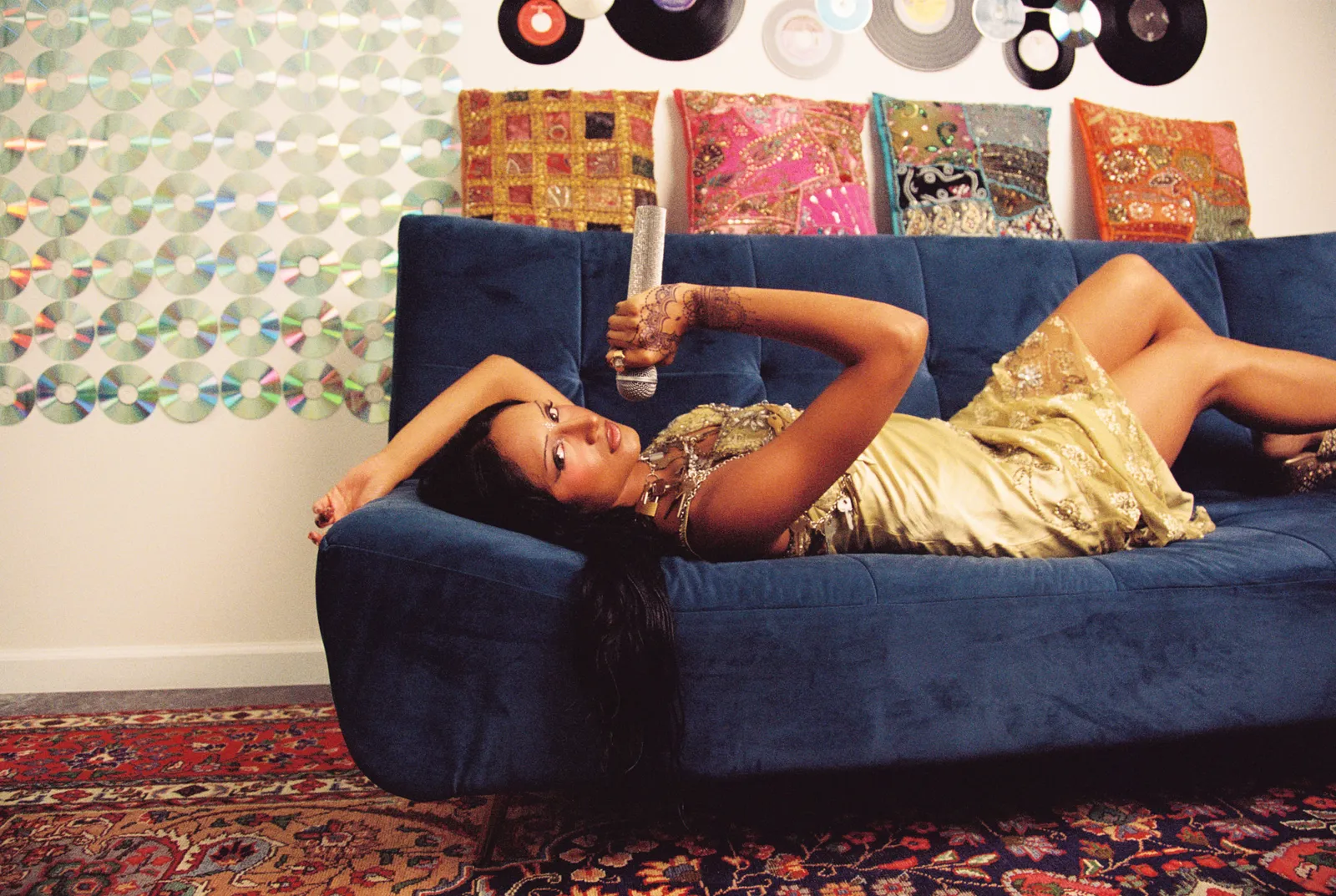
Marina Oya for Vogue India
For a long time, “global pop” was basically a logistics story.
Music traveled - through radio, labels, diaspora circuits, but it still originated somewhere identifiable. You could point to a track and say: this is American R&B, or UK grime, or Punjabi pop. Even when those sounds mixed, they did so in ways that preserved a center of gravity.
Pop music has always had a passport problem. From the moment records started crossing oceans, artists have been borrowing, bending, and blending sounds that didn’t “belong” to them on paper. In that sense, fusion isn’t new, it’s foundational. You can hear it in the global pop architecture of Coldplay, who moved from Brit-rock introspection into stadium-sized, genre-fluid collaborations with artists across K-Pop, Afrobeats, and electronic music. You can hear it even more explicitly with the Gorillaz, who essentially built an entire career on the idea that genre is just a suggestion box, most recently collaborating with a slew of Indian artists, including the late Asha Bhosle, on their new record, The Mountain.

What’s different now is that the center of gravity is gone. Fusion used to be a sound. Now it’s becoming an identity system.
Call it third culture pop: a shape-shifting, genre-melting wave of music made by artists who grew up between worlds and now create as if borders never existed. The term borrows from sociological and cultural frameworks describing “third culture kids” - people raised across multiple cultural contexts, but in music, it hits differently. It’s more than identity, it’s production style, songwriting instinct, sonic DNA.
This isn’t just a stylistic evolution. It’s the result of overlapping systems: migration, streaming infrastructure, and diaspora audience formation. Or to borrow from cultural studies, it’s what happens when global cultural flows stop being external pressures and start becoming internal conditions. The key idea here comes from theorist Arjun Appadurai: culture doesn’t move in straight lines anymore - it flows through overlapping “scapes” (ethnoscapes, mediascapes, etc) where migration, media, and identity constantly reshape each other.
A big part of this shift comes down to diaspora as infrastructure, not just audience.
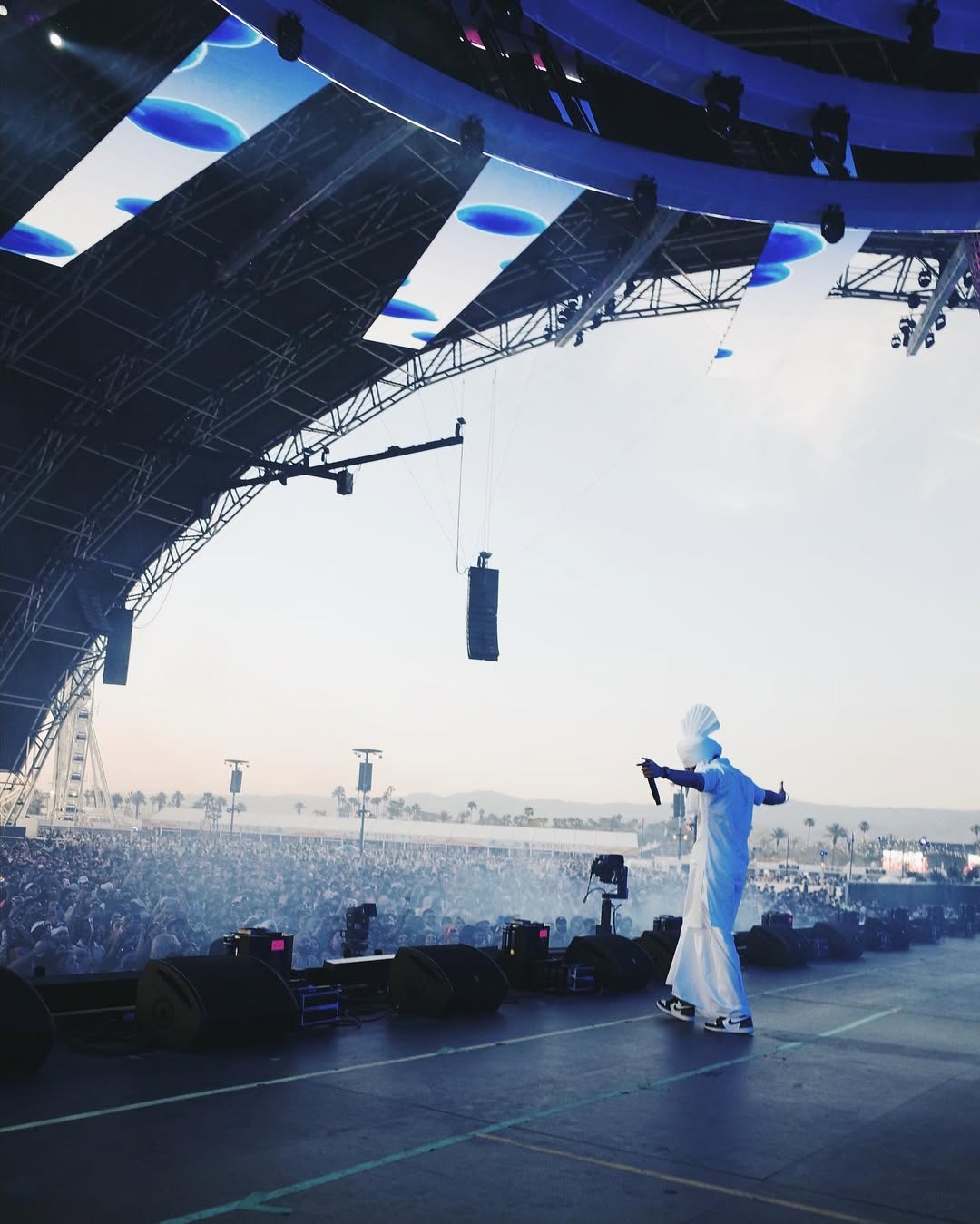
Take Punjabi pop. Its global rise didn’t follow the traditional industry model of top-down export. Instead, it scaled through diaspora hubs - Toronto, London, Vancouver, where artists like AP Dhillon built hybrid sounds combining Punjabi lyrics with trap and R&B production.
What’s important here isn’t just the sound, it’s the mechanism. Diaspora communities act as built-in audiences. Those audiences circulate music organically across borders and platforms like Spotify, amplifying that circulation algorithmically.
This creates a feedback loop: culturally specific music travels globally without needing to be translated or diluted first. Punjabi pop’s growth is organic, diaspora-driven, rather than industry-engineered.
But diaspora is only one side of the story.
With artists like Rhea Raj, the important question isn’t “what is she blending?” It’s “why does it feel so seamless?”Because the blending happened before the studio.
Diasporic artists often internalize multiple musical systems early, through family community and media exposure. So when Raj builds something like ‘Mumbai,’ she’s not layering Indian elements onto pop. She’s working from a musical vocabulary where those elements are already integrated.
This is what scholars call glocalization - local cultural forms adapting within global systems while retaining specificity. Influence is no longer something an artist accesses externally; it is often already embedded in their musical vocabulary before production begins.
You hear a more aggressive version of this with Hanumankind. On ‘Run It Up,’ especially in live contexts like Coachella, South Indian percussion chenda melam isn’t there to signal identity. It’s doing technical work - driving tempo, shaping energy, structuring the drop.
That’s a redistribution of musical power. What used to be “regional texture” is now core architecture.
If rhythm is one layer of this shift, language is another.
On ‘Hayati,’ Felukah and DJ Habibeats move between Arabic and English without framing it as a crossover moment. There’s no “switch”, just continuity.
Lana Lubany’s ‘The Snake’ pushes this even further. Arabic and English aren’t just coexisting; they’re strategically entangled to sharpen emotional meaning, rather than broaden accessibility.
That reflects a broader change in how music functions for diaspora audiences. Music tied to language and culture often acts as a bridge for identity and belonging, especially for younger generations navigating multiple contexts.
In other words, bilingual tracks are infrastructure. They mirror how audiences actually think and communicate - not switching between worlds, but inhabiting them at once.
The track’s cultural reach was amplified when it was featured during New York City Mayor Zohran Mamdani’s inauguration, a moment that symbolically underscored how diasporic sound has moved from niche to civic visibility. Music like this doesn’t just soundtrack culture - it participates in it.
When hybridity is about survival, not scale
Up to this point, diaspora has been the main driver. But third culture pop doesn’t always come from movement across borders. Sometimes it comes from staying put.
Kneecap complicate the idea that hybridity is always about global expansion. On ‘H.O.O.D,’ their sound pulls from grime, hip-hop, punk, and techno, but the real genre is Belfast street culture refracted through global club circuitry. The goal isn’t to circulate internationally. It’s to anchor locally.
Here, hybridity functions as a tool of cultural preservation.
Their use of Irish language, combined with global club sonics, reflects a different kind of glocalization - one where global forms are used to sustain local identity rather than dilute it. Global flows don’t erase local cultures; they can also reinforce them by creating new forms of relevance.
In this context, instability becomes strategic. The music doesn’t resolve into a clean genre because stability would make it easier to absorb into dominant systems. Instead, it stays jagged - partly local, partly global, fully resistant.
Put all of this together, and the bigger shift becomes clearer. Third culture pop isn’t just more hybrid music. It reflects a breakdown in how music is categorized at all. Genres used to map geography now map components.
At the same time, diaspora audiences provide built-in global distribution. Streaming platforms collapse distance into recommendation. Artists build from hybrid identity rather than adding it later.
The result is a kind of music that doesn’t reject genre, it just doesn’t rely on it.
If this trajectory continues, the next phase of pop won’t be defined by new genres - it’ll be defined by new identity formations. The interesting question isn’t whether this replaces traditional genres, it probably won’t. It’s whether genre becomes secondary to something else: who the music represents, and how that identity travels.
Because at this point, the most accurate way to describe a lot of pop music isn’t where it’s from.
It’s what worlds had to overlap for it to exist in the first place.
If you enjoyed this article, sign up for our newsletter and follow us on Instagram and LinkedIn to stay up to date with Gen Admission 🎶

.png)
.jpg)